
Vandaag of morgen in huis

Kwaliteit gegarandeerd

Welkomstaanbiedingen ontgrendelen: GRATIS bezorging | Tot 80% korting | Gratis 30 dagen JoyPlus-proefperiode
Download de app
A 3-in-1 outdoor jacket usually consists of a waterproof outer jacket and a removable fleece or thermal inner jacket. You can wear both layers separately or combine them. This makes this type of jacket appealing for walking, camping, travelling and everyday commuting in the Netherlands, where the weather can change quickly.
However, not every jacket labelled 3-in-1 is automatically suitable for intensive outdoor use. Marketing copy often focuses on one impressive feature, while important details are mentioned less clearly.
A jacket can be water-repellent without keeping out heavy rain for long periods. So check whether a hydrostatic head rating is provided and whether the seams are taped. Zips, shoulder seams and the join between the hood and jacket can be particularly weak points.
For everyday use in a Dutch shower, a waterproof outdoor jacket may be sufficient. For camping or mountain trekking, a higher hydrostatic head rating and taped seams are more relevant.
A jacket with thick fleece lining can be comfortably warm, but during brisk walking or climbing, excess heat may not escape as easily. So, alongside insulation, look at the MVTR rating: this indicates how much water vapour a fabric can allow through per square metre over 24 hours.
A breathable waterproof jacket will not prevent you from sweating, but it can help transport moisture away from the body. Underarm ventilation zips, an adjustable hem and adjustable cuffs are also practical advantages.
A 3-in-1 jacket for women and men should offer enough room for the inner layer and, if necessary, an extra jumper. However, a jacket that is too loose can let in wind and feel less comfortable when cycling or walking.
Use the product size guide and compare chest, shoulder and sleeve measurements with a jacket that already fits you well. Also check the measurements of the outer and inner jackets separately. A weight-and-height recommendation is useful as a guide, but it does not replace body measurements.
Hydrostatic head is expressed in millimetres of water pressure, for example 35.900 mm H₂O. This figure comes from a laboratory test and mainly indicates the pressure the fabric withstands during testing. In practice, wear, fit, zips and seams also play a role.
So check:
A stated MVTR rating, such as 16.000 g/m²/24 uur, provides a technical indication of vapour permeability. The testing method and conditions may vary. Treat the figure as a point of comparison rather than a guarantee that you will stay dry during every activity.
For a walking or trekking jacket, good freedom of movement and adjustable ventilation are also important. For commuting, a slightly heavier windproof jacket may actually be more practical.
Anyone walking with a rucksack or regularly exploring woodland and dunes will encounter friction from shoulder straps, branches and rocky ground. A stated abrasion resistance, such as 40.000+ wrijvingscycli, provides more information than simply describing a product as “durable”.
Also read the washing instructions. For the PELLIOT jackets, these include washing cold on a delicate programme, do not bleach and do not tumble dry. Close the zips before washing and always follow the sewn-in care label. Incorrect care can affect the water-repellent finish and fit.
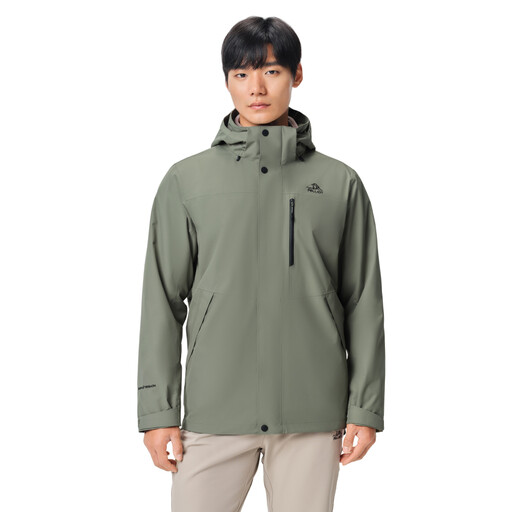
Why it suits this profile: This green men's version combines an outer layer with a thermal inner layer. This makes it suitable as a waterproof jacket, a separate liner or a combined jacket for walks, travel and everyday use.
According to the product information, it has a hydrostatic head rating of 35.900 mm H₂O, an MVTR of 16.000 g/m²/24 uur and abrasion resistance of more than 40.000 cycles. The choice is therefore not based solely on a general marketing term.
Three ways to wear it, an adjustable hood, hem and cuffs, plus a thermal inner layer with anti-static treatment according to the product description.
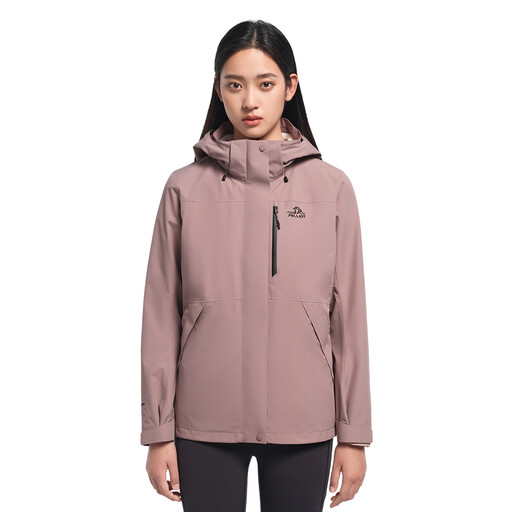
Why it suits this profile: This women's version is aimed at anyone who values technical specifications and flexibility. The jacket can be worn separately or as a combination for walking, camping and travelling.
The size guide lists separate measurements for the outer and inner jackets. This helps you choose a size that leaves room for layers, rather than relying solely on the letter sizes from S to XXXL.
According to the product information: 35.900 mm H₂O hydrostatic head, 16.000 g/m²/24 uur MVTR and a fleece-like thermal liner with anti-static treatment.
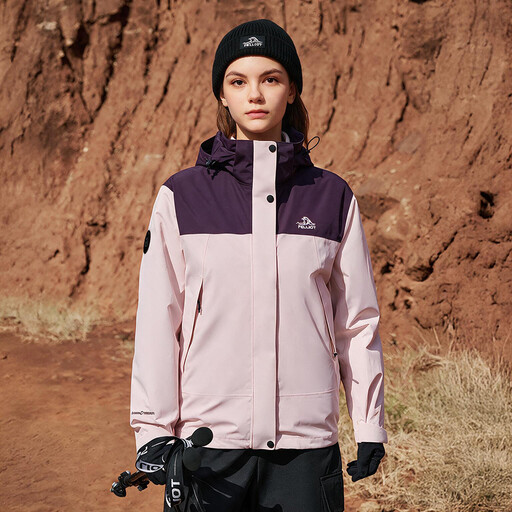
Why it suits this profile: The combination of a membrane, sealed seams and a thermal liner is suited to more intensive use during trekking, camping and longer walks in changeable weather.
According to the product information, this jacket uses STORMS BREATH with a microporous waterproof and breathable membrane and taped seams. The description also mentions a scratch- and abrasion-resistant outer layer.
Three ways to wear it and a stated temperature range for each configuration: outer layer 10–25 °C, liner 0–10 °C and combined -5 to -15 °C. Treat this as product guidance, not a guarantee for every individual.
We have put together a complete, up-to-date list of products that fully meet these strict selection criteria and the applicable European safety regulations.
A durable outdoor jacket is not just about robust fabric. Its lifespan also depends on washing it correctly, storing it carefully and repairing minor damage promptly. Check the zips, seams and water-repellent finish after use.
That depends on the insulation, windproofing, fit and activity. The combined jacket may be suitable for cold and wet conditions, but extra clothing may be needed when standing still for long periods or in low temperatures. Always check the product specifications and recommended temperatures.
Follow the care label. The PELLIOT models mentioned recommend washing cold on a delicate programme. Do not use bleach and avoid tumble drying if this is stated in the product instructions. Close the zips before washing and dry the jacket according to the label.
There is no fixed lifespan. Intensive use with a rucksack puts more strain on the fabric than occasional use in the city. Washing regularly using suitable settings, avoiding unnecessary heat and following the care instructions can help the jacket retain its fit and features for longer. When buying, look for verifiable details such as abrasion resistance, material construction and warranty terms.
