
Vandaag of morgen in huis

Kwaliteit gegarandeerd

Welkomstaanbiedingen ontgrendelen: GRATIS bezorging | Tot 80% korting | Gratis 30 dagen JoyPlus-proefperiode
Download de app
On paper, a 3-in-1 fleece-lined outdoor jacket might seem perfect for every season. However, many people end up with a jacket that's too warm for hiking, doesn't offer enough protection against British rain, or becomes less comfortable after just a few months. That's why the right choice depends not just on colour and price, but more importantly on its construction, sizing, and verifiable product specifications.
A waterproof outdoor jacket can offer varying levels of protection. Some product descriptions only mention a water-repellent outer layer, while other models feature a membrane, taped seams, and a specified hydrostatic head rating. Without this information, it's difficult to predict how the jacket will perform during prolonged rain.
Therefore, pay attention to:
A fleece-lined jacket can provide warmth, but the level of insulation and thickness varies between models. A detachable fleece liner is useful in cool, dry weather, while the outer shell mainly protects against rain and wind. When you wear both layers together, you get a warm winter jacket suitable for colder conditions.
Check that the inner jacket can actually be worn separately and that both layers connect well. A poorly attached lining can shift around, while an outer jacket that's too tight leaves little room for a jumper.
A 3-in-1 jacket is often worn over a fleece, gilet or jumper. If you choose based solely on your usual clothing size, you might find the shoulders and sleeves are too tight when you wear both layers. Check the size chart and compare the chest, shoulder and sleeve measurements with a jacket you already own and like the fit of.
The size charts for the PELLIOT models provide separate measurements for the outer and inner jackets. This is more useful than a simple S, M or L designation.
The hydrostatic head indicates how much water pressure a material can withstand according to a specified test method. It's not a guarantee for every weather situation, but it is a useful way to compare products. For the PELLIOT men's and women's models, the product information states a hydrostatic head of 35,900 mm H₂O according to JIS. The description also mentions a waterproof construction and, for the women's model, a microporous membrane with sealed seams.
Use figures like these as technical information, not as a promise that you'll stay completely dry in all conditions. Rain can also get in through zips, hood openings or poorly maintained fabric.
A breathable rain jacket helps to wick moist air away from your body. Look for the MVTR value, usually shown in grams per square metre per 24 hours. A higher value can be beneficial for active hiking or trekking, but your experience will also depend on the temperature, humidity, clothing layers and your level of exertion.
According to the product information for the PELLIOT models, the breathability rating is 16,000 g/m²/24h according to JIS. This makes the specification relevant for hikers and campers looking for a combination of rain protection and ventilation.
For a hiking or trekking jacket, abrasion from rucksack straps, branches and rocky surfaces are important considerations. According to the product description, the PELLIOT men's models are rated for more than 40,000 abrasion cycles. This is a test result provided by the manufacturer and not a guarantee of a specific lifespan.
Furthermore, a windproof jacket should seal well without restricting your freedom of movement. Adjustable cuffs, hem and hood are practical in open terrain and during bike rides or your daily commute.
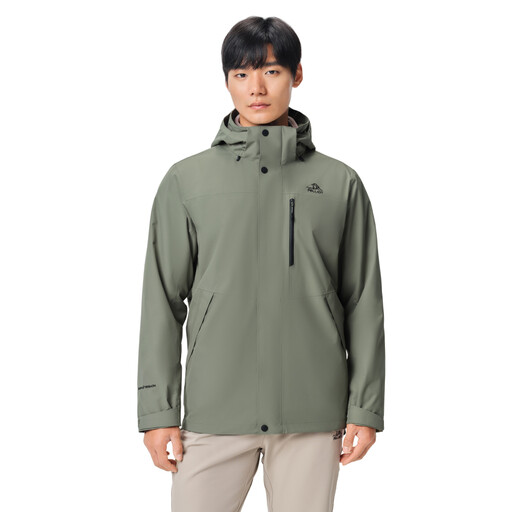
Why it fits this profile: A practical men's outdoor jacket for everyday use, camping and gentle walks, offering multiple ways to wear it.
The product information mentions a detachable fleece liner, a hydrostatic head of 35,900 mm H₂O and adjustable parts. This allows you to make a concrete comparison of its technical features beforehand.
3-in-1 design, a stated MVTR of 16,000 g/m²/24h, and an outer fabric with a stated abrasion resistance of over 40,000 cycles.

Why it fits this profile: Aimed at users looking for a technical 3-in-1 system for changing conditions during outdoor activities.
The product description mentions that the layers can be worn separately, and it features taped seams, adjustable cuffs and an adjustable hem. This makes it easy to verify the system's functionality.
The outer shell and inner jacket can be worn separately or together; the description mentions GORE-TEX fabric and 550-fill-power down insulation.
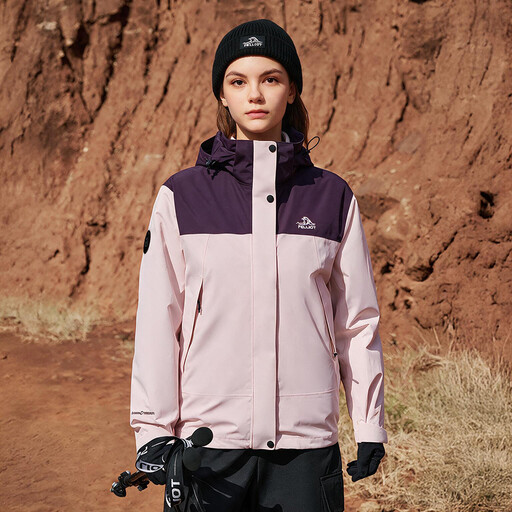
Why it fits this profile: Suitable for women looking for an outdoor jacket for hiking, trekking, camping and commuting in changeable temperatures.
The manufacturer mentions a microporous STORMS BREATH membrane, sealed seams and three ways to wear it. The specified temperature ranges are guidelines, not a guarantee for every user.
Detachable shell, detachable liner or combined; the description mentions wind protection, a thermal lining and a scratch- and abrasion-resistant outer layer.
We've put together a complete, up-to-date list of products that fully meet these strict selection criteria and comply with current European safety regulations.
Even a durable trekking jacket needs proper care. Close all zips before washing the jacket and always follow the care label. For the PELLIOT models mentioned, a cold, delicate wash cycle is recommended. Bleach, tumble drying and dry cleaning are not recommended. Allow the jacket to air-dry and do not use a high ironing temperature.
Don't wash a waterproof jacket more often than necessary. Dirt and skin oils can affect the performance of the outer layer, but washing it incorrectly can also damage the coating. After washing, check that the seams, zips and connection points are still working correctly.
A 3-in-1 all-season jacket can be used flexibly: the outer shell in rain and wind, the fleece liner in cool, dry weather, and both layers together in colder conditions. The ideal temperature range depends on your level of exertion, the wind, the clothes you wear underneath and your personal preference.
That depends on the lining and the fit. A fleece lining provides warmth, but it's not the same as a heavily insulated parka. If you're sitting still in cold conditions, you may need extra thermal layers. For hiking or cycling, the combination of the fleece and the windproof outer shell can provide enough comfort.
Measure your chest, shoulder width and sleeve length and compare them with the size chart for your chosen model. Leave enough room for a base layer or a jumper. With a 3-in-1 fleece-lined outdoor jacket, the outer and inner measurements are not always the same, so be sure to check both before you order.
