
Vandaag of morgen in huis

Kwaliteit gegarandeerd

Welkomstaanbiedingen ontgrendelen: GRATIS bezorging | Tot 80% korting | Gratis 30 dagen JoyPlus-proefperiode
Download de app
A 28 cm frying pan suits many households: large enough for several portions, but usually still suitable for a standard hob. However, the diameter alone does not tell you enough. The material, base, coating and maintenance requirements all determine whether the pan suits your cooking style.
Marketing copy can sometimes make comparisons difficult. For example, a pan may be described as “suitable for all hobs”, but have a relatively small base that does not align properly with your induction zone. Terms such as “PFAS-free”, “durable” and “scratch-resistant” also do not automatically mean that every part of the pan has the same properties.
The stated 28 cm is usually the diameter at the top rim. The usable cooking area may be smaller, particularly with a high rim, wok shape or thick base. So also check the base diameter and the dimensions of your cooking zone.
A large pan on a small induction zone may heat unevenly. With gas, the flame should also remain beneath the base rather than rising up the sides.
A non-stick frying pan is convenient for eggs, pancakes and dishes requiring little fat. However, many coatings do not cope well with being overheated while empty, metal utensils or sudden changes in temperature.
A ceramic coating is not automatically indestructible. According to product information from various brands, hand washing is often recommended, even when the pan is listed as dishwasher-safe. This can help keep the coating usable for longer.
A frying pan for all hobs must be explicitly suitable for induction, gas, electric, ceramic and halogen if you want to use it with all these options. For example, the Tefal Easy Cook & Clean 28 cm lists gas, electric and ceramic glass, but not induction. This makes the pan unsuitable for an induction hob, despite its generous size.
An aluminium pan generally heats up quickly and is relatively lightweight. A stainless-steel frying pan is sturdy and resistant to high temperatures, but requires more control when preheating and adding oil to reduce sticking.
According to the product description, a tri-ply or three-layer pan usually combines stainless steel with an aluminium core. For example, the PURECOOK Tri-Ply 304 uses a stainless steel–aluminium–stainless steel structure. According to the manufacturer, this construction is designed to distribute heat more quickly and evenly. This is a manufacturer’s product claim, not a universal guarantee of every cooking result.
Please note: 304 stainless steel refers to a type of steel. It does not mean that the pan automatically has non-stick properties. An uncoated stainless-steel pan requires a different cooking technique: preheat it in a controlled manner, then add oil and avoid turning the heat up unnecessarily high.
If you are deliberately looking for a PFAS-free frying pan, read the product listing carefully. “PFOA-free” does not mean the same as “PFAS-free”. According to the product description, the Brabantia Onyx features a 100% PFAS-free ceramic coating. The WMF Durado is also listed as PFAS-free and featuring a ceramic coating according to its product specifications.
For ceramic and other non-stick coatings, preferably use wooden or silicone utensils. Also check whether the manufacturer states a maximum temperature. An oven-safe pan may have a different limit from the lid or handle.
A frying pan with a lid is practical for simmering, reducing sauces and dishes where moisture needs to be retained. Check whether the lid is included; with many frying pans, it is sold separately.
When using a pan in the oven, three points are important:
According to the product information, the PURECOOK 28 cm comes with a glass lid and is listed for oven use up to 220 °F. This is a relatively low stated temperature, so always check the current product specifications before using it in the oven.
A dishwasher-safe frying pan can save time, but dishwasher detergent, high temperatures and prolonged exposure to moisture may affect the appearance and coating. Hand washing with a soft sponge and mild washing-up liquid is often the more cautious option.
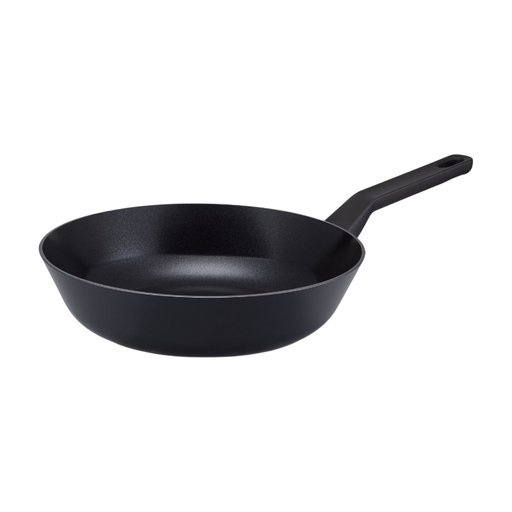
Why it suits this profile: The lightweight aluminium wok shape is suitable for stir-fries, vegetables, noodles and larger portions. According to the product description, this pan works on induction, gas, electric, ceramic and halogen hobs.
The product specifications clearly state that it has a PFAS-free ceramic coating and is suitable for induction. Hand washing is recommended to help protect the coating.
100% recycled aluminium according to the product description, 28 cm diameter, PFAS-free ceramic coating and dishwasher-safe design.
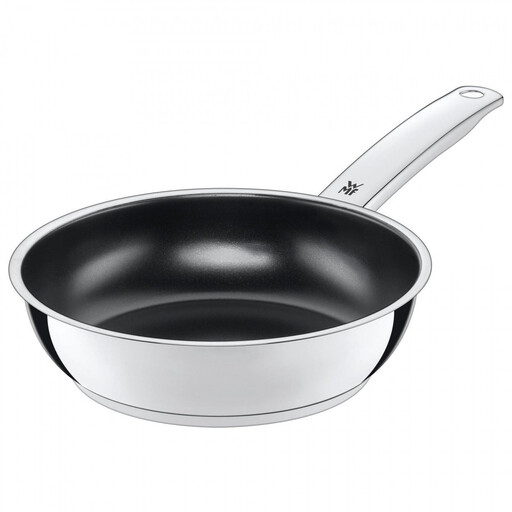
Why it suits this profile: This stainless-steel pan with a ceramic coating is designed for everyday frying on all hobs, including induction. The product specifications state that it is suitable for oven use up to 250 °C.
The specifications list the compatible heat sources, oven limit and PFAS-free ceramic coating separately. The pan is not dishwasher-safe, making hand washing part of its care routine.
Cromargan 18/10 stainless steel according to the product information, ceramic coating, wide pouring rim and a stated maximum oven temperature of 250 °C.
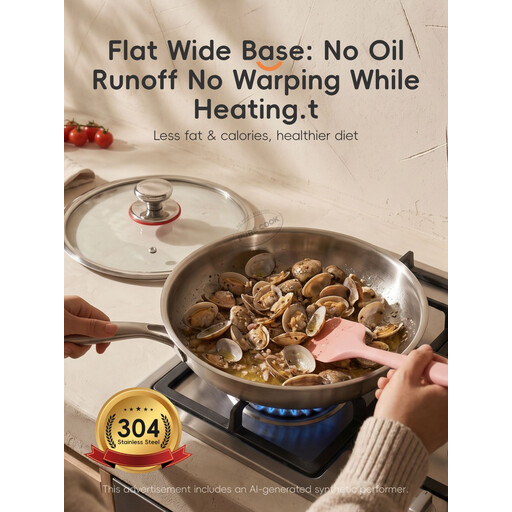
Why it suits this profile: The uncoated tri-ply construction suits anyone who alternates between high-temperature cooking, searing and simmering, and wants to use a lid for sauces and stew-like dishes.
The product information explicitly states that there is no chemical non-stick coating. This avoids coating wear, but you must use the correct stainless-steel cooking technique.
304 stainless steel with an aluminium core, suitable for induction and the other listed heat sources, dishwasher-safe according to the product information and supplied with a glass lid.
We have put together a complete, up-to-date list of products that fully meet these strict selection criteria and the applicable European safety regulations.
A durable frying pan is not just about the material. Use the pan according to the manufacturer’s instructions:
With an uncoated stainless-steel pan, food may initially stick more easily. Preheating over a medium-high setting, then adding oil and allowing the food to cook undisturbed for a moment, generally gives you more control than stirring constantly.
This varies by model. Look in the product specifications for “induction-compatible” or “suitable for all hobs”. Also check the base diameter. A 28 cm pan may have a smaller effective induction base.
Its lifespan depends on use, temperature, utensils and cleaning. A coating may wear more quickly if the pan is overheated while empty or used with metal spatulas and scouring sponges. Replace the pan when the coating is visibly damaged or starts to come away.
No. PFAS-free describes the stated coating property, not the pan’s suitability for oven use. Check the maximum temperature for the pan, handle and lid separately. This also applies to a ceramic frying pan.
