
Vandaag of morgen in huis

Kwaliteit gegarandeerd

Welkomstaanbiedingen ontgrendelen: GRATIS bezorging | Tot 80% korting | Gratis 30 dagen JoyPlus-proefperiode
Download de app
A 24 cm stock pot is a useful size for households that regularly make soup, pasta, noodles, porridge or stews. It generally offers enough space for three to five people without taking up as much room as an extra-large soup pot.
However, a diameter of 24 cm does not tell you everything. A pan may have too little capacity, be unsuitable for induction or be difficult to clean. Terms such as “tri-ply”, “even heat distribution” and “suitable for all hobs” should also be checked in the product specifications.
A 24 cm stock pot can have a capacity of around 3 to well over 5 litres. The usable capacity is usually lower than the maximum capacity, as you need room to stir and prevent food from boiling over.
For a household of three to five people, a 5-litre stock pot or a model of around 5.5 litres is often more practical for soup and pasta. A compact 3-litre pan is better suited to smaller portions or everyday cooking for one or two people.
Check that the pan is explicitly suitable for induction, gas and ceramic hobs. The base is particularly important with ceramic pans and some aluminium models. An magnetic or composite base is required for induction.
Also check how flat the base is. A pan that does not sit securely on the hob distributes heat less predictably and may move while you are stirring.
A stainless steel stock pot without a non-stick coating can last for many years, but discolouration, limescale and baked-on starchy residue are possible. Dishwasher compatibility is convenient, but always check the complete care instructions for the product. Washing by hand with a soft sponge can help keep the finish looking good for longer.
Maintenance is different for an enamelled cast-iron casserole dish. This type of pan retains heat for longer, but it is heavier and can be damaged by knocks, metal utensils or sudden changes in temperature.
304 stainless steel is widely used for stock pots. It has no non-stick coating and is suitable for boiling, simmering and preparing acidic ingredients. However, heat distribution depends mainly on the construction of the base. A multi-layer or composite base can distribute heat more evenly throughout the pan than a thin single-layer base.
Aluminium generally heats up quickly and is lightweight. With an aluminium pan, you should check what type of coating has been used and which usage and care instructions apply.
Enamelled cast iron is an interesting option for stews and slow cooking. The downside is its greater weight. Lift a full pan carefully and check that the handles are comfortable to hold securely.
A deep large stock pot is suitable for soup, stock, pasta and noodles. A wide pan with a relatively low rim is more convenient for reducing and searing. In addition to the diameter, consider:
A soup pot with lid should have a well-fitting lid that sits securely. A glass lid allows you to monitor the cooking process without repeatedly lifting it. A steam vent can help reduce pressure and boiling over, but it will not prevent a pan from being overfilled.
Check that the handles are heat-resistant and firmly attached to the pan. Silicone sleeves can improve grip, but you should still use oven gloves or pan holders when handling hot pans.
A dishwasher-safe stock pot saves time, but a mirror-polished exterior may become dull with frequent machine washing. Do not use abrasive cleaners or metal scouring pads if the manufacturer advises against them.
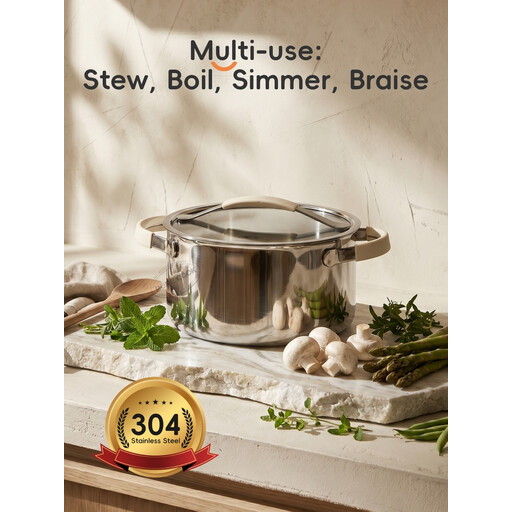
Why it suits this profile: The product specification states a diameter of 24 cm, a capacity of 5.64 quart and a matching lid. This makes it a practical choice for everyday portions and family meals.
The capacity is clearly stated and the lid is included. Before buying, check the current product page for hob compatibility and care information.
24 cm diameter, 5.64 quart capacity, matching lid and removable silicone sleeves, according to the product listing.
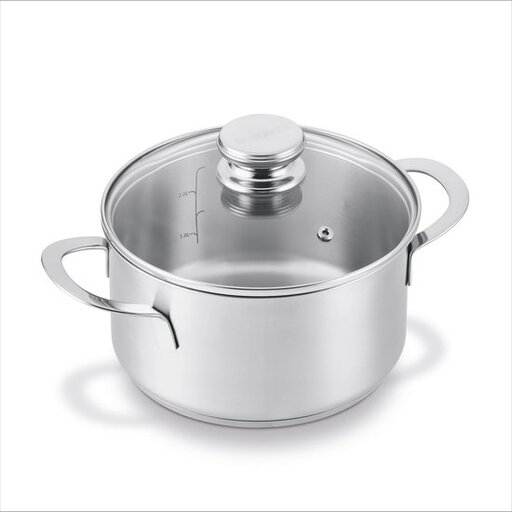
Why it suits this profile: According to the product information, this stainless steel stock pot has a capacity of 5.5 litres, a glass lid and an integrated volume scale on the inside.
The product specification states compatibility with induction, gas, electric, ceramic and halogen hobs. Check the current product page for the exact care instructions.
5.5-litre capacity, volume scale, welded handles, glass lid with steam vents and dishwasher compatibility, according to the product listing.
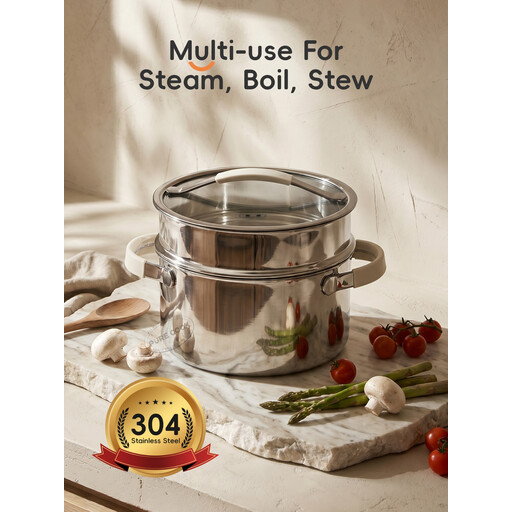
Why it suits this profile: The product listing describes a two-tier, removable steaming solution. This suits users who want to steam while preparing soup, noodles or another dish at the same time.
The application is clearly described: a pan, steaming rack and glass lid are included. Before use, check the assembly and maximum fill level to help prevent boiling over.
24 cm diameter, stainless steel construction, steaming rack, glass lid and, according to the product specification, suitability for gas, induction and ceramic hobs.
We have compiled a complete, up-to-date list of products that fully meet these strict selection criteria and the applicable European safety regulations.
This depends on the base. Choose a model that explicitly states that it is suitable for induction. A pan for all hobs will generally also state compatibility with gas and ceramic hobs. Also check that the base is flat enough for your cooking zone.
For three to five people, around 4.5 to 5.5 litres is practical for soup, pasta and stews. Allow for some space above the food. A 3-litre pan is more suitable for smaller portions and everyday cooking for one or two people.
Its lifespan depends on the material, base construction, use and care. Stainless steel without a coating does not have a non-stick layer that can wear away, but it can still become scratched or discoloured. A dishwasher-safe stock pot can be cleaned in the machine if the manufacturer states that this is suitable; washing by hand with a soft sponge will often help keep the finish looking good for longer.
