
Vandaag of morgen in huis

Kwaliteit gegarandeerd

Welkomstaanbiedingen ontgrendelen: GRATIS bezorging | Tot 80% korting | Gratis 30 dagen JoyPlus-proefperiode
Download de app
A 24 cm frying pan suits many kitchens: it’s large enough for a couple of burgers, some vegetables or an omelette, but not so large that it becomes awkward to use on a standard hob ring. Yet many models look much the same online. A shiny coating, claims such as “extra strong” and a base that’s suitable for induction don’t always tell you enough about how a pan will perform day to day.
Here are some common pitfalls to watch out for:
An aluminium frying pan is generally lightweight and often comes with a non-stick coating. That makes it handy for eggs, pancakes and vegetables. For use on an induction hob, it needs a suitable induction base, such as an integrated stainless steel disc.
A stainless steel frying pan is durable and suitable for high temperatures. Without a coating, stainless steel takes a little more care when it comes to preheating, adding oil and choosing the right moment to add ingredients. It can be a good choice for searing meat.
Cast iron retains heat for a long time, but it’s heavy. A model such as a 24 cm cast-iron casserole is better suited to slow-cooked dishes and oven use than to quickly frying pancakes. So check whether you really want a shallow frying pan, or whether a pan with a lid and higher sides would suit you better.
A non-stick frying pan can be useful for delicate ingredients and cooking with less fat. Use wooden or silicone utensils if the manufacturer recommends them, and don’t heat the pan when it’s empty.
For a ceramic frying pan or a PFAS-free frying pan, check the exact product details. “PFAS-free” doesn’t mean “wear-proof”. Product information for models including Brabantia Onyx and WMF Durado specifies a PFAS-free coating. That’s a product specification; the pan’s lifespan still depends on temperature, utensils and care.
If you’re looking for a frying pan for all heat sources, check whether the manufacturer lists gas, electric, ceramic, halogen and induction separately. Oven suitability can vary too: the pan, handle and lid may each have their own maximum temperature.
A low rim is handy for everyday cooking. If you also want to make sauces, rice or one-pan meals, consider a 24 cm sauté pan with higher sides and possibly a lid. A 24 cm pan often has a usable capacity of around 1.6 to 3 litres, depending on its shape.
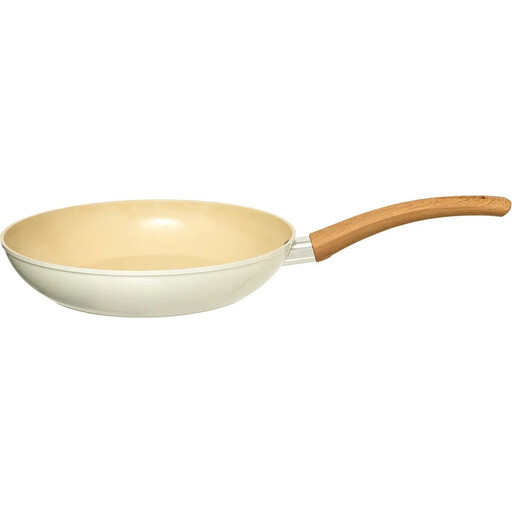
Why it suits this profile: According to the product information, this lightweight pan weighs 440 grams and has a diameter of 24 cm. That makes it easy to handle for everyday cooking.
The specifications list gas, induction, ceramic and electric hobs. The pan is dishwasher-safe, but hand-washing is recommended to help extend its lifespan.
Recycled aluminium, two non-stick layers, a 3.1-litre capacity and a stainless steel induction disc.
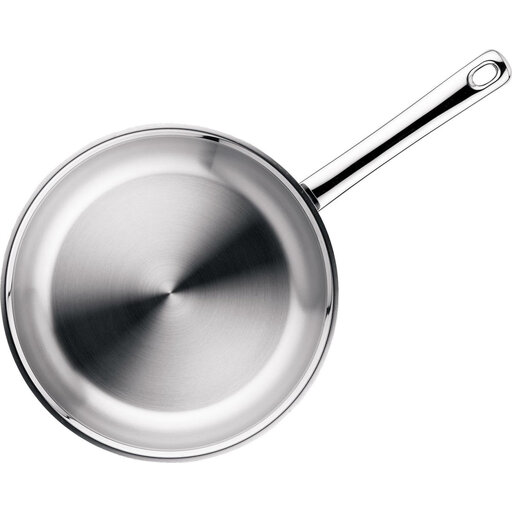
Why it suits this profile: This stainless steel frying pan is aimed at cooks looking for an uncoated pan for searing and high-temperature cooking.
There’s no non-stick coating that could be damaged by metal utensils. Stainless steel does, however, call for a different cooking technique and regular preheating.
Cromargan 18/10 stainless steel, suitable for all heat sources, oven-safe up to 250 °C and dishwasher-safe.
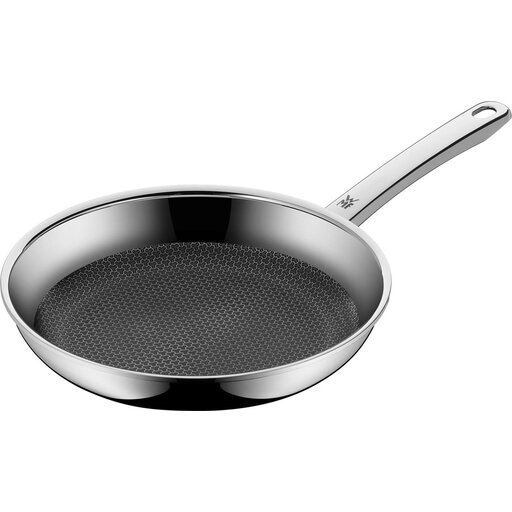
Why it suits this profile: The combination of stainless steel, aluminium and a honeycomb structure is designed for cooks who want to sear food as well as prepare dishes with a non-stick effect.
The product information clearly states that this pan isn’t dishwasher-safe. That means you won’t discover a care restriction only after buying it.
Suitable for induction and other heat sources, heat-resistant up to 260 °C and supplied with a 5-year manufacturer’s warranty, according to the product information.
We’ve put together a complete, up-to-date list of products that meet these strict selection criteria and the applicable European safety regulations.
Yes, but only if the product information explicitly says it’s suitable for induction. Check the base diameter too. A small hob ring may heat the pan more evenly than one that’s much larger than the base.
That depends on how you use and care for it. Avoid heating it empty, exposing it to extreme temperature changes, using metal utensils or cleaning it with abrasive sponges. Even if a pan is dishwasher-safe, hand-washing can help protect the coating. Stop using it if the coating starts to peel or becomes visibly damaged.
Not always. A PFAS-free pan may have a ceramic coating, but check the specifications for the model you’re considering. Before ordering, also check the recommended cleaning method, maximum oven temperature and compatible heat sources.
