
Vandaag of morgen in huis

Kwaliteit gegarandeerd

Welkomstaanbiedingen ontgrendelen: GRATIS bezorging | Tot 80% korting | Gratis 30 dagen JoyPlus-proefperiode
Download de app
A 20-inch cabin suitcase might seem like a straightforward purchase. But choose the wrong size and you could face extra charges at the gate, while a heavy case leaves less room for your clothes. Suitcases also vary considerably in their wheels, materials, locks and internal layout.
Whether you’re going away for the weekend, travelling for work or taking a short flight, your choice isn’t just about the number of inches. Check the external dimensions, the case’s own weight and the rules of the airline you’re flying with.
The 20-inch label isn’t a fixed international size. Two models with the same description can have different external dimensions. For example, a suitcase measuring 55 × 35 × 22 cm is less deep than one measuring 56,5 × 37,5 × 23 cm.
So always check:
A product may be described as an airline-approved suitcase, but you should still check the latest rules for Ryanair, easyJet, British Airways or any other airline.
A lightweight suitcase is practical at the airport and can leave you more of your baggage allowance for other things. A soft polyester case is often flexible and has handy exterior pockets, but it offers different protection from a hard-shell case made from PC, ABS or a combination of the two.
Read the product description carefully. Claims such as “impact-resistant” or “durable” come from the brand. According to the manufacturer’s product information, the Kono hard-shell suitcase is made from ABS+PC and is designed to protect against scratches and knocks. Treat this as a product specification, not a guarantee that damage will never occur.
A trolley case may have a well-organised interior, but it can be awkward to use if the wheels don’t turn smoothly or the telescopic handle feels loose. 360° spinner wheels are handy when you want to roll your suitcase beside you or turn it in a narrow queue. Two fixed wheels are generally simpler and can work well if you prefer to pull the case behind you at an angle.
Also check whether the handle has several height settings, and whether the top and side handles are suitable for lifting the case into an overhead locker.
For a cabin suitcase, the permitted size matters more than the 20-inch label. The Kono soft shell cabin suitcase measures 53 × 36 × 18 cm and has a stated capacity of around 33 litres. According to the product information, it’s intended for use with airlines including Ryanair with Priority Boarding, easyJet and British Airways. The seller also advises checking the airline’s latest rules.
The Kono 20-inch hard-shell version measures 55 × 35 × 22 cm, weighs around 2,46 to 2,5 kg and has a stated capacity of 37 litres. The NINETYGO Danube measures 56,5 × 37,5 × 23 cm, has a capacity of 38 litres and weighs 3 kg.
A larger capacity isn’t automatically more practical. If your suitcase exceeds the size limit, you may have to check it in at the airport.
Common materials include:
Don’t look at the material name alone. Check the zip, corner protection, seams, wheel attachments and how the interior is divided up too.
An integrated TSA lock can be useful during security checks when your suitcase needs to be opened. It won’t prevent your case from being stolen, so it’s no substitute for keeping valuables safe.
For efficient packing, useful features include an X-shaped strap, compression straps, a divider and a mesh pocket. A front pocket, like the one on the Kono soft shell, gives you quick access to travel documents or a boarding pass. With a hard-shell case, check that both halves can open easily when space is limited in a hotel room or on a train.
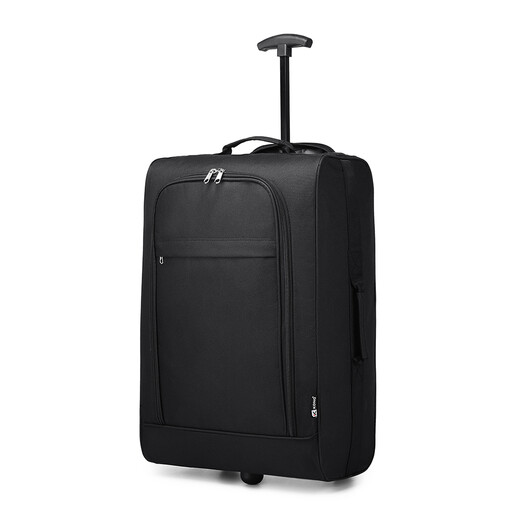
Why it suits this type of traveller: Measuring 53 × 36 × 18 cm, with a capacity of around 33 litres and a weight from 1,46 kg, this model is designed for short trips and travellers who want a case that’s easy to lift.
The stated external dimensions and weight make it easier to compare cases than relying on the 20-inch label alone.
600D polyester, a fully opening front panel, a front pocket and two wheels.
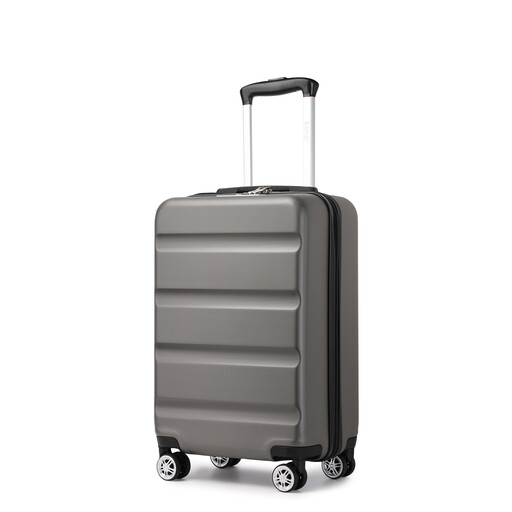
Why it suits this type of traveller: This hard-shell case is a good choice if you value a rigid shape, an organised interior and four spinner wheels for frequent short trips.
The stated dimensions of 55 × 35 × 22 cm and weight of around 2,46 kg help you check the cabin baggage requirements in advance.
ABS+PC shell, TSA combination lock, four 360° spinner wheels and a divider with a mesh pocket.
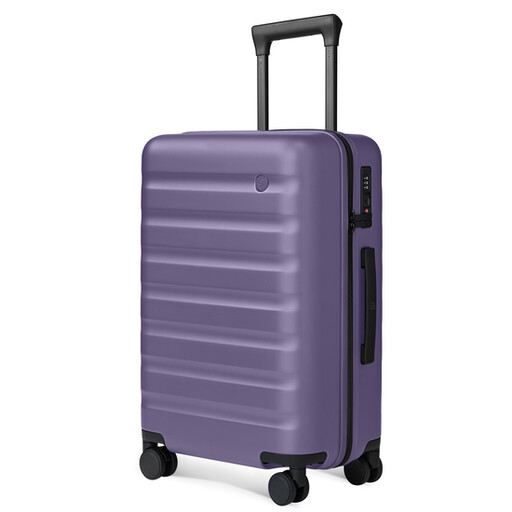
Why it suits this type of traveller: This PC hard-shell case is designed for frequent travellers who value an organised layout, integrated components and 360° wheels.
The manufacturer lists a double zip, compression straps and a separate PVC pocket. This information comes from the brand’s product description.
PC shell, TSA lock, recessed hardware and a manufacturer-stated zip test involving repeated opening and closing.
Run through this quick checklist before you buy:
We’ve put together a complete, up-to-date list of products that meet these strict selection criteria and the applicable European safety regulations.
No. Inch sizes aren’t standardised enough to guarantee that. Check the suitcase’s exact external dimensions and compare them with your airline’s baggage rules and your ticket type.
It depends on the shape and layout. The models featured here have stated capacities ranging from around 33 litres for the Kono soft shell to 38 litres for the NINETYGO Danube. Straps, dividers and a front pocket all affect how much of the space you can actually use.
A soft suitcase is often lighter and may have an exterior pocket for documents. A hard-shell case keeps its shape and offers a different level of protection from pressure on the outside. The right choice depends on how you pack, your preferred weight and the way you travel.
