
Vandaag of morgen in huis

Kwaliteit gegarandeerd

Welkomstaanbiedingen ontgrendelen: GRATIS bezorging | Tot 80% korting | Gratis 30 dagen JoyPlus-proefperiode
Download de app
A 20-inch cabin suitcase might seem like a safe choice for air travel. However, “20 inch” doesn’t automatically mean the case will be accepted as cabin baggage by every airline. Dimensions, weight, wheels and handles all count, as does the way you travel.
Whether you’re spending a weekend in Berlin, travelling to London on business or taking a short break, you don’t want a trolley case that’s too heavy, won’t fit in the overhead locker or becomes difficult to wheel after a few trips. Use these checks to avoid the most common buying mistakes.
A 20-inch cabin suitcase might measure 55 × 40 × 20 cm, for example, but another model could be larger because of a wider frame, protruding wheels or a rigid handle. Airlines often measure the external dimensions, including all fittings.
So always check:
A case described as airline-approved isn’t automatically allowed on every flight. Ryanair and easyJet rules in particular can vary depending on your fare and booking.
A lightweight suitcase leaves more room within any weight limits. But also check the material, frame and maximum load for the handle and wheels. The product description should give you enough information about these.
A soft case often weighs less and may have a front pocket for documents or a laptop. A hard-shell case, on the other hand, keeps its shape and protects your belongings from external pressure. Neither material is automatically right for every trip.
A TSA lock, quiet spinner wheels, a phone holder or a cup holder can be handy. But they don’t automatically make a suitcase right for your trip. Extra fittings can also add weight or take up space.
Focus on the features you’ll use every day: a smooth telescopic handle, a sturdy closure, well-organised compartments and wheels suited to your route. If you’re travelling to Schiphol by train, your priorities will be different from those of someone who only wheels their case from a taxi to a hotel.
Many 20-inch models are around 55 cm high, but their width and depth can vary. For example, according to the product information, the British Traveller 20-inch ABS+PC suitcase measures 53 × 35 × 21 cm, while the Kono hard-shell suitcase with an aluminium frame measures 55 × 37.5 × 23 cm.
A difference of a few centimetres can matter. Before you buy, check the airline’s website and measure the suitcase including the wheels and handle.
For short trips, a capacity of around 30 to 40 litres is often practical. A larger volume isn’t always helpful if you want to take the case as cabin baggage. Check whether the interior keeps clothes in place with packing straps, a zipped pocket or a mesh divider.
Examples from our range:
These figures are taken from the relevant product descriptions. Check the latest specifications on the product page before ordering.
A hard-shell suitcase made from ABS, PC or a combination of the two keeps its shape. Product descriptions often associate PC with flexibility and impact resistance. Treat such statements as claims made by the brand, rather than a guarantee for every travel situation.
A soft suitcase made from polyester is often flexible and usually has a front pocket. Two wheels can work well when pulling the case in a straight line, while four 360° spinner wheels offer greater manoeuvrability in a busy departure hall. For cobbled streets and uneven pavements, larger, sturdier wheels matter more than simply being described as “silent”.
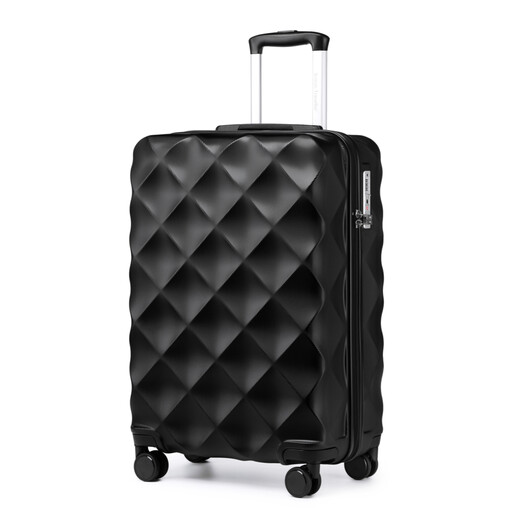
Why it suits this traveller: This model combines a low stated weight of 2.27 kg with a capacity of around 34 litres. It’s a good choice if you’re looking for a compact hard-shell case for short trips.
The stated dimensions of 53 × 35 × 21 cm and the weight are clearly listed. Still, check for yourself whether the depth fits your ticket’s baggage allowance.
ABS+PC shell, four 360° wheels, adjustable aluminium trolley handle and a 3-digit TSA combination lock, according to the product description.
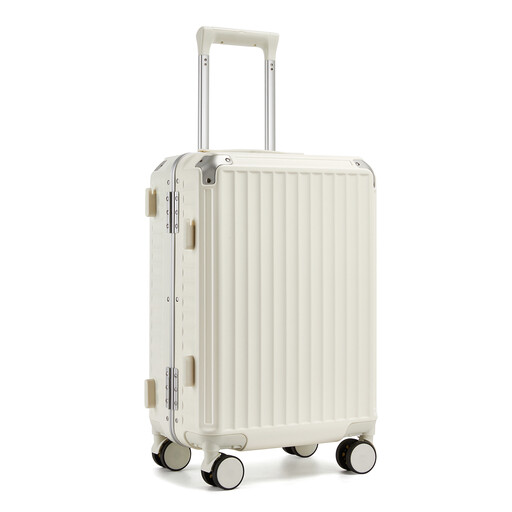
Why it suits this traveller: Business travellers who value quick access and a well-organised interior will appreciate features such as a one-click closure, phone holder and compartments for small items.
The external dimensions of 55 × 37.5 × 23 cm and the weight of 3.45 kg are clearly stated. This makes it easier to check in advance whether the model fits your cabin baggage allowance.
PC shell, aluminium frame, TSA lock, 360° spinner wheels and a capacity of around 39 litres, according to the product information.

Why it suits this traveller: This model is a good option if you have limited storage space at home or want a flexible case for short trips. According to the product description, it folds down and can be expanded.
The product information gives both the dimensions when in use and when folded. Before buying, check which dimensions your airline applies when the case is unfolded.
A stated capacity of 46 litres, a net weight of 6.83 lb, 360° spinner wheels and a TSA-approved lock, according to the product description.
We’ve put together a full, up-to-date list of products that meet these strict selection criteria and the applicable European safety regulations.
That depends on your ticket and the current terms and conditions. Some models are described as suitable for Ryanair and easyJet, but that doesn’t mean they’re universally accepted. Always compare the case’s exact external dimensions with the baggage allowance for your booking.
Choose a hard-shell case if keeping its shape, having a TSA lock and protecting the contents are important to you. A soft case is practical if you need a low weight, a front pocket or some flexibility. With either type, check the wheels, closure and interior layout.
Its lifespan depends on how often you use it, the surfaces it travels over, how much you pack and how well you look after it. Don’t overload the handle or wheels, avoid dragging the case over uneven paving for long periods, and clean the exterior with a soft, damp cloth. Before buying, also check the warranty and returns information on the product page.
