
Vandaag of morgen in huis

Kwaliteit gegarandeerd

Welkomstaanbiedingen ontgrendelen: GRATIS bezorging | Tot 80% korting | Gratis 30 dagen JoyPlus-proefperiode
Download de app
A 20-inch cabin suitcase might seem simple to choose at first. However, models vary considerably in size, weight, materials and layout. A suitcase accepted as cabin baggage by one airline may be too large for another. Cheap wheels, an awkward interior or a heavy frame can also make it frustrating to use.
This buying guide will help you assess marketing claims and choose a cabin suitcase that suits the way you travel.
The 20-inch label is no guarantee that a suitcase will be accepted as hand luggage. Always check the external dimensions, including the wheels, handles and any parts that stick out. A model measuring 55 × 40 × 20 cm is noticeably different from one measuring 55 × 35 × 22 cm.
Airlines can also change their rules. Before you travel, check the latest requirements for airlines such as Ryanair, EasyJet, BA or Jet2. A product description might say that a model is suitable as hand luggage for Ryanair or EasyJet, but whether it’s accepted will depend on your fare, ticket and the airline’s current rules.
A low product weight is useful, especially if you’re travelling with a limited baggage allowance. But you should also consider the capacity. A lightweight suitcase with limited space or little protection may be less useful than a slightly heavier model with a well-organised interior.
Check the weight when empty, capacity in litres and internal layout. A 20-inch model with a capacity of around 32 to 38 litres is generally suitable for a short city break, business trip or weekend away. How many clothes it holds also depends on the shell thickness and the layout.
The phrase ‘silent spinner wheels’ sounds appealing, but it doesn’t tell you exactly how the suitcase will roll on every surface. Four 360° spinner wheels make it easier to manoeuvre around an airport. On cobbles, over bumps and along uneven pavements, even double wheels can make noise or encounter more resistance.
Also check whether the handle is adjustable and whether the wheels are securely attached to the case. These are practical details to consider in a wheeled suitcase for air travel that you’ll use regularly.
Compare the dimensions in centimetres, not just the inch size. Here are some examples from the range:
These are external dimensions. According to the product information, internal dimensions may differ by around 1 to 2 cm. Don’t choose your luggage based on the product name alone, and check your airline’s requirements before you travel.
An ABS hard-shell suitcase is often relatively lightweight and has a sturdy exterior for everyday use. Polycarbonate, or PC, is known as a flexible hard plastic. An ABS+PC hard-shell suitcase combines both materials, according to the product specifications.
Bear in mind that material names don’t guarantee an unlimited lifespan. Scratches, knocks and wear are still possible, especially with frequent check-in. For a cabin suitcase that you usually carry yourself, a textured shell, sturdy zips and securely fitted wheels may matter more than a striking design.
A suitcase with a TSA lock can be opened by authorised staff during certain security checks without forcing the case. The lock won’t prevent loss or theft, and it’s no substitute for taking care of your valuables. Set a new code as soon as you buy the suitcase and keep the combination somewhere safe.
A practical interior ideally includes:
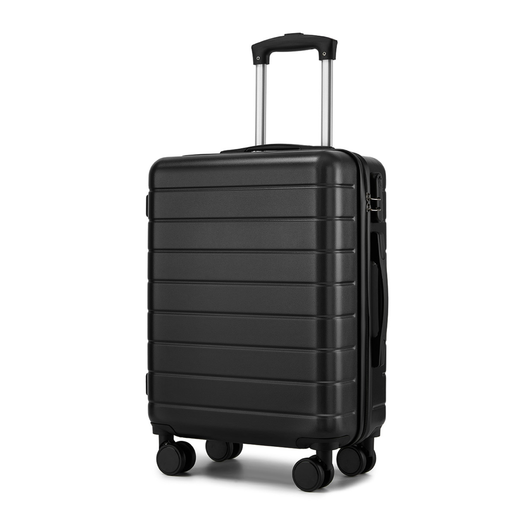
Why it suits this type of traveller: This model is designed for short trips and offers a straightforward set of features without an expansion mechanism. According to the product information, it has a capacity of 32 litres, weighs around 2.6 kg and measures 55 × 40 × 20 cm.
The dimensions, capacity and weight when empty are clearly stated. Just make sure 55 × 40 × 20 cm is suitable for your ticket.
ABS hard shell, 360° silent spinner wheels, adjustable handle, three-digit combination lock and packing straps with a mesh divider.
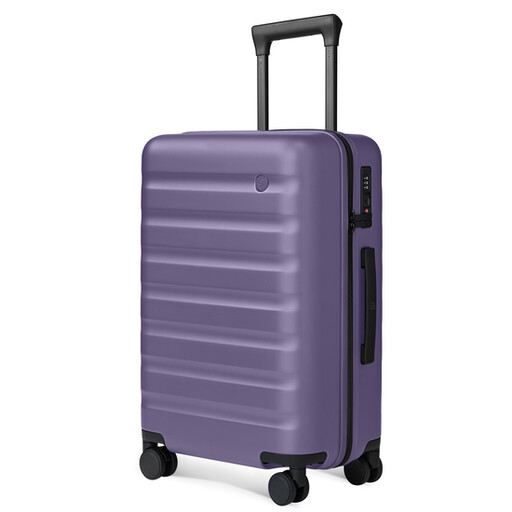
Why it suits this type of traveller: This PC cabin suitcase is designed for travellers who appreciate details such as a flat top, recessed hardware and a separate PVC wet bag. According to the product information, it’s intended for trips of three to five days.
The product specifications list specific features rather than relying on general claims such as ‘silent’ or ‘durable’. Check the stated dimensions against your airline’s requirements.
PC hard shell, 360° silent wheels, TSA lock, compression straps and a zip that, according to the product information, has been tested for specific cycles and pulling force.
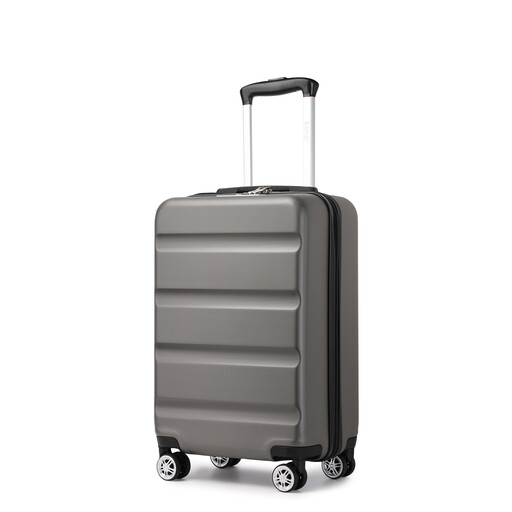
Why it suits this type of traveller: This model combines a compact size with an ABS+PC shell, a capacity of 37 litres and a weight of around 2.46 to 2.5 kg when empty. It’s a good fit for frequent city breaks, business trips and air travel where every kilo counts.
Its relatively low weight means the suitcase uses up less of your baggage allowance. The stated dimensions still determine whether it’s suitable.
Four double 360° spinner wheels, an aluminium telescopic handle, a TSA combination lock, YKK zips according to the product information, and an organised interior.
We’ve put together a complete, up-to-date list of products that meet these strict selection criteria and the applicable European safety regulations.
No. Inch sizes are only a general guide. Compare the full external dimensions with your airline’s current baggage rules and your ticket. Also check the maximum weight and any rules for taking a second personal item.
Many models come with the default code 000. Open the lock, press the reset button with a pen or pointed object, choose a new three-digit code and release the reset button. Test the new combination before you travel. The exact process can vary between models, so follow the instructions or product information.
Its lifespan depends on the material, wheel housing, how often you use it and how you transport it. A suitcase carried as cabin baggage only will usually be handled less roughly than one that’s checked in. Avoid overpacking, don’t drag it over rough surfaces for long periods, and clean the shell with a soft, damp cloth.
