
当日/次日达

品质保障

开启新人专享福利: 全场免邮 | 低至 2 折 | 免费试用 30 天 JoyPlus 会员
下载 Joybuy
A 20 cm frying pan is handy for cooking one or two portions, eggs, pancakes, vegetables or a small piece of meat. Its compact size takes up little space and it usually heats up quickly. However, not every small frying pan is suitable for your hob or the way you cook.
Marketing claims such as “super-strong non-stick coating” or “suitable for all heat sources” don’t always tell the whole story. So be sure to check the technical specifications, care instructions and any limitations.
An induction pan needs a magnetically conductive base. If the only information provided is that the pan is suitable for gas and electric hobs, that doesn’t necessarily mean it will work on induction. Look for an explicit mention of induction, ideally alongside gas, ceramic and electric hobs.
Also check the diameter of the cooking zone. A 20 cm pan may have a smaller effective base, making it harder for the induction hob to detect it efficiently.
A non-stick frying pan won’t necessarily stand up to metal spatulas, high temperatures or harsh cleaning products. Use wooden, silicone or nylon utensils, and avoid heating the pan empty for a long time.
Even if a pan is dishwasher-safe, manufacturers often recommend washing it by hand. Detergent and high temperatures can shorten the life of the coating.
PFOA-free doesn’t automatically mean that a product is completely free from all PFAS or PTFE. So check exactly what the claim says. For example, some manufacturers state that no PFOA has been intentionally added, while other models are described in their product information as PFAS-, PFOA- and PTFE-free.
Don’t present these properties as a general safety guarantee. Check the official product specifications and follow the manufacturer’s instructions.
A 20 cm diameter is practical for:
A larger frying pan is more convenient for cooking for several people or preparing large pieces of meat. If you often cook several portions at once, you could consider a cookware set with frying pans.
An aluminium pan is usually lightweight and heats up quickly. A steel or cast-iron pan retains heat for longer, but may be heavier. A ceramic frying pan has a ceramic non-stick coating; according to the manufacturer’s product information, it may be suitable for cooking with little oil. Its actual lifespan depends on the temperature, utensils and care.
An uncoated pan, such as a stainless steel model, requires more attention when preheating and adding fat. On the other hand, there’s no non-stick coating to wear away. If convenience is your priority, a coated pan is usually easier to use.
Before ordering, check whether the pan is suitable for your hob. A frying pan for all heat sources will generally state explicitly that it is suitable for induction, gas, electric and ceramic hobs.
Also check the handle. A plastic or Bakelite handle may have a lower temperature limit than a metal one. If the pan has a detachable handle, check whether it needs to be removed before using the pan in the oven.
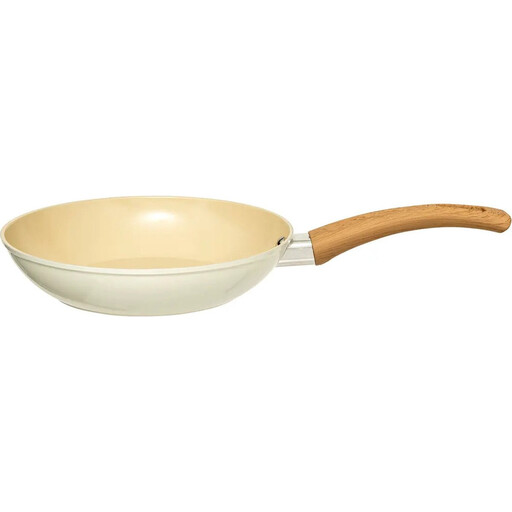
Why it suits this type of user: This compact pan is lightweight and suitable for gas, induction, ceramic and electric hobs. That makes it a practical choice for students, first-time buyers and everyday use.
The product information explicitly lists the four main heat sources. The pan is dishwasher-safe, although hand washing is recommended to extend its lifespan.
Made from recycled aluminium, with a 20 cm diameter, two non-stick layers and a soft-touch handle.
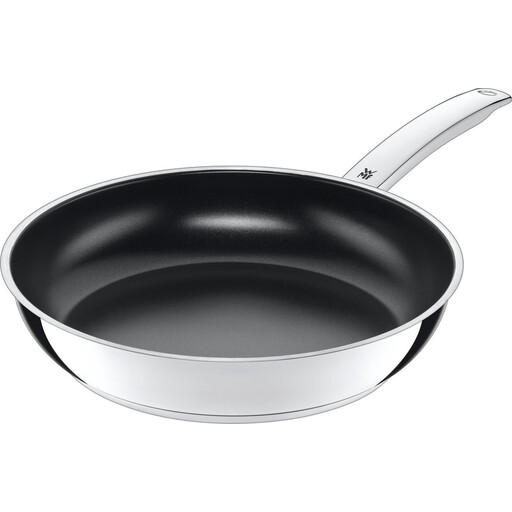
Why it suits this type of user: Its Cromargan stainless steel construction, ceramic coating and ergonomic handle make it a good match for anyone looking for a compact pan for regular use.
The product specifications state that it is suitable for all heat sources, including induction. The pan is not dishwasher-safe, so there’s no ambiguity about how to care for it.
20 cm size, ceramic coating, wide pouring rim and a stated two-year manufacturer’s warranty.
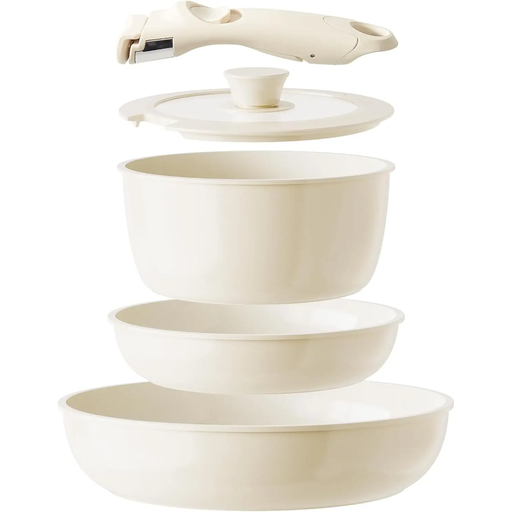
Why it suits this type of user: This set includes a 20 cm frying pan, a larger pan, a saucepan, a lid and a detachable handle. It’s a good fit for small kitchens, campers and households that want flexible cooking options.
According to the product information, the coating is PTFE-, PFOA- and PFAS-free. The handle can be removed for oven use and compact storage. Always check the latest instructions before use.
Suitable for induction, gas and electric hobs, with a stackable design, ceramic coating and dishwasher-safe construction according to the product description.
We’ve put together a complete, up-to-date list of products that meet these strict selection criteria and the applicable European safety regulations.
That depends on the base. Only choose a model that is explicitly stated to be suitable for induction. A magnetic base or stainless steel induction disc may help it work on an induction hob, but always check the product specifications.
Lifespan varies depending on the material, coating and how the pan is used. High temperatures, metal utensils and dishwasher use can wear the coating more quickly. Hand washing, low to medium heat and suitable utensils will generally help keep the pan in good condition for longer.
No. PFOA is one specific substance within the broader group of PFAS. A product described by the manufacturer as PFOA-free is not automatically described as completely PFAS-free. So read the exact product specifications and check which coating has been used.
