
Vandaag of morgen in huis

Kwaliteit gegarandeerd

Welkomstaanbiedingen ontgrendelen: GRATIS bezorging | Tot 80% korting | Gratis 30 dagen JoyPlus-proefperiode
Download de app
A 2-in-1 air purifier with fan combines air purification with air circulation. It sounds practical: one appliance to tackle pollen and dust, provide a cooler breeze in summer and distribute heated air more effectively in winter. However, not every model is suited to every situation.
The most common buying mistakes usually stem from three misconceptions:
If you’re mainly looking to keep cool, a fan may be all you need. If you also want to filter the air indoors, choose an appliance with a clearly described filtration system and information about replacement filters.
An air purifier with a HEPA H13 filter is designed to filter very small airborne particles. The MONSGA AP200 product information lists an H13 HEPA filter, a five-stage filtration system and a filtration efficiency of at least 99.95%. These are product specifications; in practice, performance also depends on factors such as installation, the room and timely filter maintenance.
When buying, check:
A plasma or ionisation function is not a substitute for a mechanical filter. If possible, check how the function works and whether you can switch it off separately.
The CADR, or Clean Air Delivery Rate, indicates how much filtered air the appliance can deliver per hour. The MONSGA AP200 lists a CADR of 280 m³/h and a recommended room size of around 33 m².
Use the recommended area as a guide, not a guarantee for every home. A room with high ceilings, lots of soft furnishings, open doors or limited ventilation may need a different capacity. In a bedroom, a quieter low setting is important; in a living room, how well the air circulates around the space also matters.
Also note the difference between:
So, an air circulator with a HEPA filter needs to do more than move plenty of air: it must also direct that air through the filter.
A quiet air purifier for the bedroom needs to be comfortable to use while you sleep. The AP200 lists 25 dB in sleep mode. Always check whether this is the minimum noise level. At higher settings, the noise can increase noticeably.
An air purifier with an app is handy if you want to adjust the settings from the sofa or bed. An air purifier with remote control is practical if you don’t want to rely on Wi-Fi. Also check:
The options below are matched to different uses. The features listed are based on the available product information. A standard fan is not presented as an air purifier.
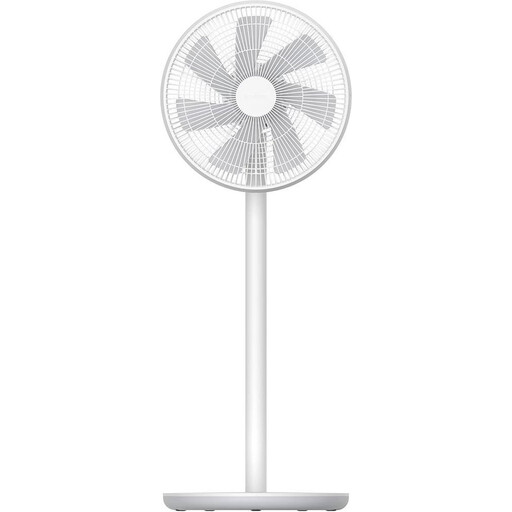
Why it suits this user: For anyone mainly looking for air circulation and cooling, with no need for a filter function. The fan can be used on a table or the floor and works with the Mi Home app.
The product information makes it clear that this is a fan, so you won’t accidentally buy it thinking it’s an air purifier with a HEPA filter.
Airflow of up to 20 m³/min according to the product information, app control and an adjustable table or floor set-up.
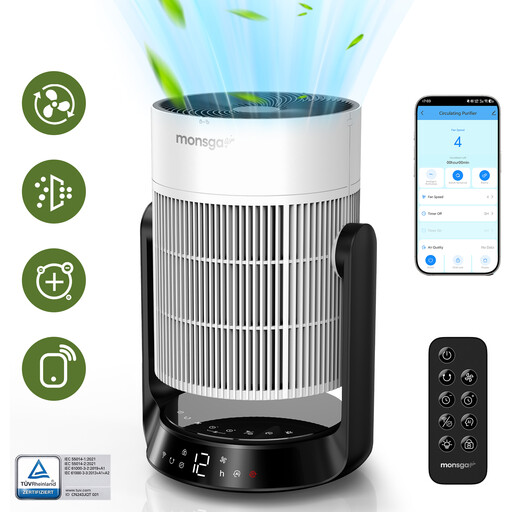
Why it suits this user: For households looking for one appliance to purify and circulate the air in a bedroom, living room or home office.
The specifications list an H13 HEPA filter, a CADR of 280 m³/h and a sleep mode at 25 dB separately. This makes the filter and noise claims easier to assess.
According to the product information: 12 speeds, 120° horizontal oscillation, Tuya app, remote control and a recommended room size of around 33 m².
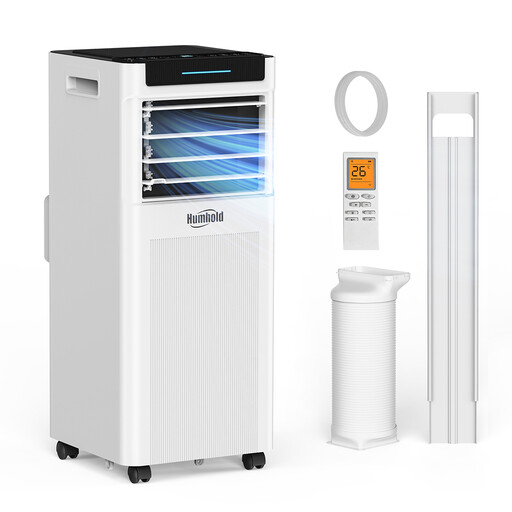
Why it suits this user: For anyone who needs active cooling and dehumidification as well as ventilation, in a room of up to around 30 m².
The description lists a washable high-density filter, but not a HEPA H13 filter. So don’t choose this model if certified HEPA filtration is your main requirement.
2.6 kW cooling capacity, cooling, dehumidifying and fan modes, plus a 24-hour timer and remote control.
We’ve put together a complete, up-to-date list of products that meet these strict selection criteria and the applicable European safety requirements.
It can be, provided the sleep mode is quiet enough and the appliance isn’t blowing directly towards your bed. Check the stated noise level, timer and display brightness. A figure such as 25 dB usually applies to one specific low setting, not every speed.
It depends on how often you use the appliance, the air quality and the type of filter. A household with pets, lots of dust or windows that are opened regularly may need to replace the filter more often. Follow the manual and use a filter replacement reminder if one is available. Don’t wash a HEPA filter unless the manufacturer clearly says you can.
Energy use varies depending on the motor, speed and how long you use it for. Check the power consumption and use a timer or automatic mode when you don’t need the appliance running continuously. A low wattage rating also tells you nothing about the filter capacity, so always compare energy use alongside CADR, noise level and room size.
