
Vandaag of morgen in huis

Kwaliteit gegarandeerd

Welkomstaanbiedingen ontgrendelen: GRATIS bezorging | Tot 80% korting | Gratis 30 dagen JoyPlus-proefperiode
Download de app
Buying a new 18V cordless drill seems simple until you get lost in a sea of specifications and marketing promises. Many serious DIYers and independent contractors invest in a machine that loses power after a few months or whose batteries turn out to be prohibitively expensive. To prevent you from wasting money, we'll expose the most common pitfalls and show you what really matters.
Before you make a choice, it's important to recognise the marketing tricks that often lead to a bad purchase.
cordless drill deal can be expensive in the long run. You're not just investing in a tool, but in an entire battery platform. If you later want to buy other tools from the same brand, you're tied to their batteries and chargers. A B-brand with limited tool options or expensive batteries is a dead end.brushless cordless drill is more efficient and requires less maintenance. That's a fact. But a poorly designed brushless motor in a cheap machine can perform worse than a solid, traditional brushed motor from a top-tier brand. The term "brushless" is no guarantee of quality; it's the combination of the motor, electronics, and mechanics that counts.To choose a durable and powerful machine, focus on these three objective criteria.
These are the two most important performance indicators.
professional cordless drill, a torque of at least 50 Nm is recommended.A good cordless drill/driver has at least two mechanical gears: a low speed with high torque for driving screws and a high speed with lower torque for drilling. A metal gearbox is a sign of durability. Does the machine also have a hammer function? Then it's a cordless hammer drill, suitable for drilling into stone and brick.
The motor and battery determine the lifespan and endurance of your tool.
Below are a few models that suit different user profiles, based on their specifications and how they avoid the pitfalls mentioned earlier.
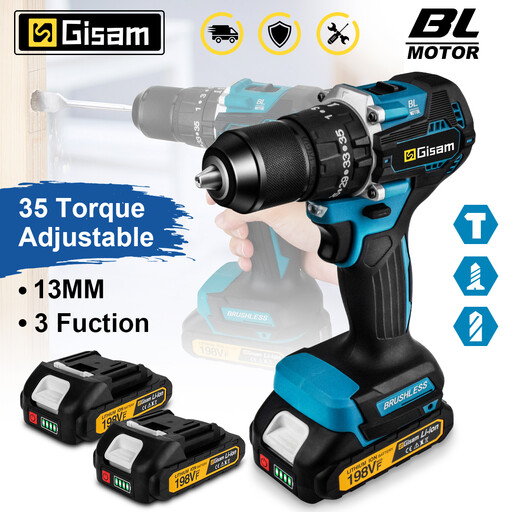
Why This Fits Their Persona: Ideal for the DIYer who wants a powerful, brushless machine without paying a premium price. Its compatibility with the widespread Makita 18V battery platform makes this a smart and flexible choice.
This model bypasses the 'battery ecosystem dilemma'. By being compatible with the Makita 18V LXT system, you are not tied to a small brand but can invest in a broad and reliable platform.
Brushless motor for a longer lifespan and efficiency. The machine has a hammer drill function, making it versatile for drilling in wood, metal, and stone.
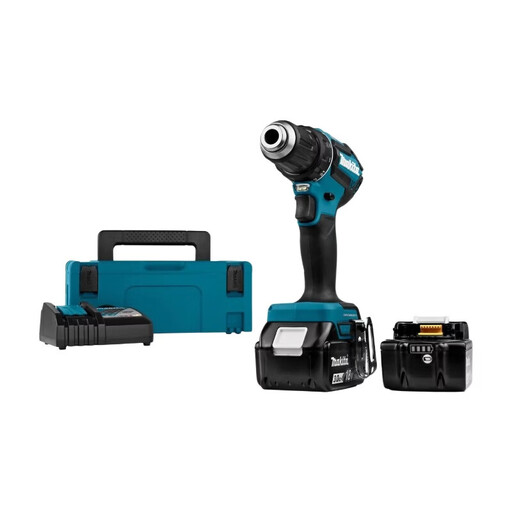
Why This Fits Their Persona: For the professional or serious DIYer who values reliability and durability above all else. This `Makita 18v drill` is a workhorse, designed for daily and intensive use.
This model avoids the "brushless myth" pitfall. Makita's brushless motor is high-quality and integrated into an all-metal transmission, ensuring proven performance and a long service life.
Fully metal 2-speed transmission for maximum durability. Comes as a complete set with 2x 3.0 Ah batteries, a fast charger, and a MAKPAC case, so you can get started right away.
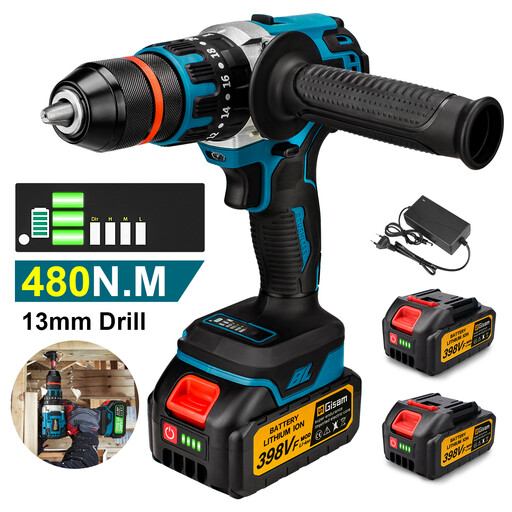
Why This Fits Their Persona: Suitable for the user who regularly performs heavy-duty drilling and driving tasks, such as drilling with large diameter bits or driving long construction screws, and seeks maximum power at a competitive price.
This model focuses on pure power and avoids the pitfall of an overly high price point. Although the 480 N.m torque is a marketing claim, it does indicate that the machine is designed for the heavier end of the spectrum within its price class.
Offers a high torque output for demanding applications. The 3-in-1 function (drilling, driving, hammer drilling) and compatibility with Makita 18V batteries make it a powerful and versatile machine.
We have compiled a complete, up-to-date list of products that fully meet these strict selection criteria and UK safety regulations.
A standard cordless drill (or drill/driver) is intended for drilling in wood, metal, and plastic, and for driving screws. A cordless hammer drill has an additional function where the chuck not only rotates but also makes small, rapid pulsating movements forward. This hammer action makes the machine suitable for drilling into harder materials like brick and concrete.
This depends entirely on your jobs. As a rule of thumb:
professional cordless drill.Generally, no. Each major brand (like Makita, DeWalt, Bosch) has its own unique battery connection to keep users within their platform. However, there are exceptions. Some brands are part of an alliance (like the CAS system), and there are budget-friendly manufacturers, like Gisam in our examples, that deliberately design their tools to be compatible with the popular batteries of a top-tier brand. Always check this carefully in the product description.
