
Vandaag of morgen in huis

Kwaliteit gegarandeerd
Download de app
Categorieën

Selecting an 18V cordless drill can be a challenge. The market offers a wide range of models, each with its own specifications like torque, motor type, and battery capacity. The wrong choice can leave you with a tool that isn't powerful enough for your job, or one that's unnecessarily heavy and expensive for simple assembly work. This article provides a factual overview of the key parameters to help you make an informed decision.
Before we review some specific models, it's helpful to understand the key specifications. These determine the performance and suitability of a cordless drill for your projects.
Based on the criteria above, we have selected three 18V cordless drills, each designed with a different user profile in mind.
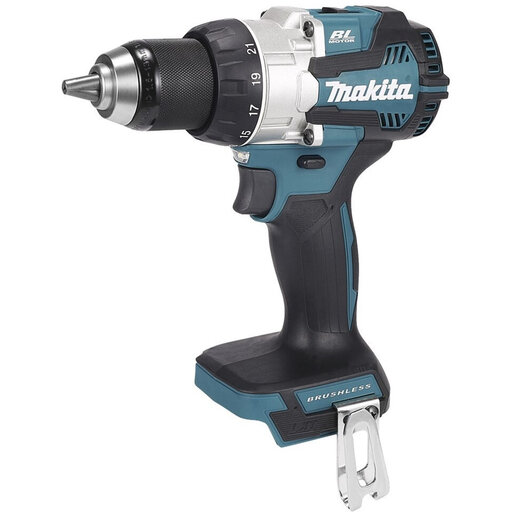
Why this product: This Makita drill is engineered for power and durability. With a maximum torque of 73 Nm and a brushless motor, this model is suited for intensive and heavy-duty drilling and screwdriving tasks. The aluminium gear housing contributes to its robustness for professional use.
Advantages:
Who is it for: This model is a strong contender for the professional or the demanding DIYer looking for a reliable and powerful tool for daily, heavy-duty use.
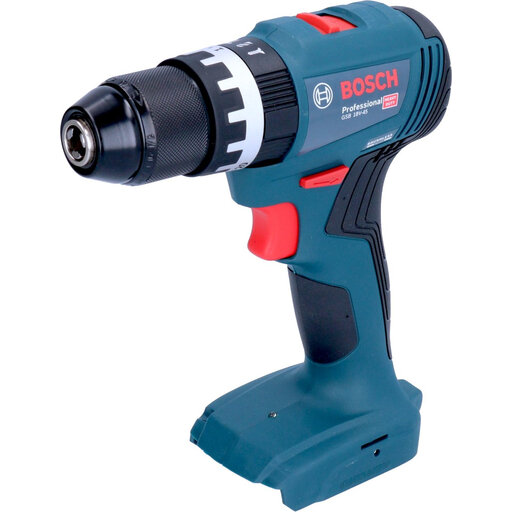
Why this product: The Bosch drill GSB 18V-45 combines a compact design with versatile functionality. Weighing just 1 kg (excluding battery) and with a short head length of 174 mm, the tool is extremely easy to handle. The added hammer function makes it suitable for drilling into masonry.
Advantages:
Who is it for: This is an all-rounder for the user seeking a lightweight, easy-to-handle tool for various jobs in and around the home, including occasional drilling into masonry.
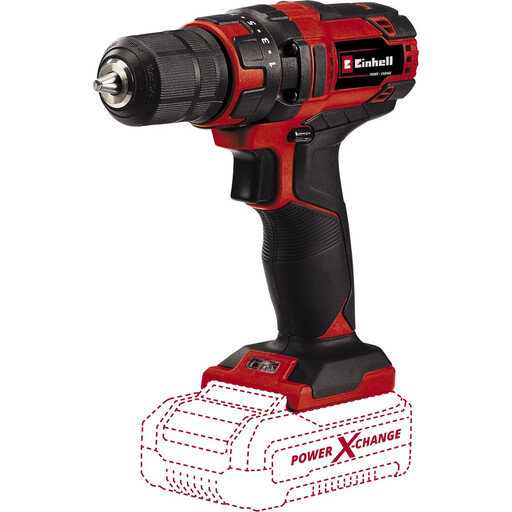
Why this product: This Einhell model is an accessible entry point into the Power X-Change battery platform. The tool is aimed at basic tasks and offers sufficient performance for most jobs around the house. It's a practical choice for anyone looking for a simple cordless drill for home use.
Advantages:
Who is it for: Ideal for the novice DIYer, the hobbyist, or for household use such as assembling furniture and hanging decorations.
| Feature | Makita DDF489Z | Bosch GSB 18V-45 | Einhell TC-CD 18/35 Li | | :--- | :--- | :--- | :--- | | Max. Torque | 73 Nm | 45 Nm | 35 Nm | | Motor | Brushless | Brushed | Brushed | | Weight (body) | 1.70 kg | 1.0 kg | approx. 1.0 kg | | Hammer Function | No | Yes | No | | Max. drilling cap. (wood) | 51 mm | 35 mm | Not specified | | Target User | Professional / Demanding | All-round / Mixed Use | Home Use / Hobbyist |
The choice of an 18V drill is highly dependent on the nature and frequency of your jobs. The models listed above represent different segments, from professional-grade power to all-round convenience and basic functionality.
If your ideal tool isn't listed here, or if you're looking for a model with different specifications, a different voltage, or from another brand, you can browse a wider selection. Explore our full category for more options.
What is the difference between a cordless drill driver and a cordless hammer drill? A standard cordless drill driver has two main functions: screwdriving and drilling (in materials like wood, metal, and plastic). A cordless hammer drill, like the aforementioned Bosch GSB 18V-45, adds a third function: a hammer mechanism. This function creates a pulsating, hammering action that assists in drilling into harder, masonry-type materials like brick or blockwork. For drilling into concrete, a rotary hammer with a pneumatic mechanism is typically required.
Is a brushless motor worth the extra cost? For occasional use and light-duty tasks, a tool with a traditional, brushed motor is often sufficient and more cost-effective. However, if you use the tool regularly or for more demanding jobs, a brushless motor offers clear advantages. According to manufacturers, they are more efficient (longer runtime per battery charge), more powerful, and have a longer lifespan because there are no carbon brushes to wear out. For professional or intensive use, the investment in brushless technology is generally recommended.
Can I use a battery from another brand on my drill? Generally, no. Manufacturers use their own proprietary designs for their batteries and the connection to the tool. A Makita battery will not fit a Bosch tool, and vice versa. While third-party adapters exist, their use is often discouraged by manufacturers as it can void the warranty and may pose safety risks. It is most practical to stay within a single battery platform.