
Vandaag of morgen in huis

Kwaliteit gegarandeerd

Welkomstaanbiedingen ontgrendelen: GRATIS bezorging | Tot 80% korting | Gratis 30 dagen JoyPlus-proefperiode
Download de app
Damp air in your home is more than just uncomfortable. It can lead to musty odours, condensation on windows, and even mould growth on walls and furniture. An electric dehumidifier is an effective solution, but the market is flooded with models that make big promises. Before you make a decision, it's crucial to know what to look for to avoid investing in a device that fails to meet your expectations.
Many people base their choice on marketing claims that are disappointing in practice. Here are a few common pitfalls:
To avoid buyer's remorse, you can focus on a few concrete specifications. These provide a more objective picture of what a home dehumidifier can really do.
The capacity, for example 16 litres per day, indicates the maximum amount of moisture a device can extract from the air within 24 hours. This is a good indicator, but it's more important to match this to the recommended room size. For an average living room or bedroom, a dehumidifier for 30m2 is often a good match. A model with the right capacity for your space will efficiently lower the humidity without consuming unnecessary energy.
The noise level is one of the most important factors for home comfort, especially in the bedroom. Look at the noise level in decibels (dB) specified by the manufacturer.
A model with a special quiet mode or night mode is a practical addition.
Some features may seem like a luxury, but they significantly increase ease of use and help with preventing mould.
Based on these criteria, we've looked at models that offer a practical solution for various situations at home.
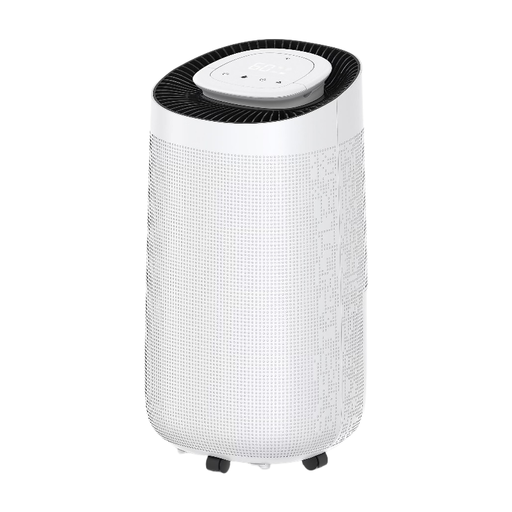
Why This Fits Their Persona: This user wants an effective solution for a damp basement, utility room, or living room. With its 16L per day capacity, the Komodo dehumidifier is suitable for rooms up to 30m? and tackles the problem head-on. The included drainage hose allows for continuous operation without needing to empty the tank.
The generous 3.2-litre water tank and the option for a permanent drainage hose avoid the pitfall of constant maintenance. The capacity is clearly linked to a realistic room size.
The combination of dehumidifying and air purification tackles both moisture and its consequences (like musty smells). The automatic defrost function ensures reliable operation, even in cooler spaces.
Why This Fits Their Persona: For families, a healthy indoor climate is a priority. This model functions as a dehumidifier with an air purifier. According to the manufacturer, the built-in filter not only helps remove moisture but also combats dust and allergens, contributing to cleaner air for the whole family.
The 2-in-1 function is not a marketing gimmick here, but a concrete feature with an antibacterial filter. The colour-coded LED indicator for humidity provides instant visual feedback.
The combination of humidity control and air purification in one device is practical and space-saving. The different modes, including an automatic mode, make the device user-friendly.
Why This Fits Their Persona: Anyone looking for a quiet dehumidifier for the bedroom needs a device that won't disturb their sleep. This model has a special, extra-quiet sleep mode. In combination with the timer function, the device can maintain humidity levels overnight and switch off automatically.
This model tackles the "too loud" pitfall with a specific sleep mode designed for minimal noise. This is a more concrete promise than a vague claim about being "quiet."
The combination of the timer and the quiet mode makes it a "set-and-forget" device for the night. The automatic shut-off when the tank is full provides extra peace of mind.
We have compiled a complete, up-to-date list of products that meet these strict selection criteria and local regulations.
How much power does a 16L dehumidifier use? Energy consumption depends on the model and the intensity of use. The Komodo Humi+, for example, has a maximum power consumption of 158 Watts. This is relatively energy-efficient, comparable to a modern television. Models with a hygrostat that automatically switch off when the desired humidity is reached are generally more economical to use.
Can I use a dehumidifier in the bedroom at night? Yes, absolutely. It's actually a great idea for creating a comfortable and healthy sleeping environment. Be sure to choose a model with a low decibel rating and a special sleep or night mode. Features like a timer and automatic shut-off ensure the device can operate safely and unattended while you sleep.
How often do I need to empty the water tank? This depends entirely on the humidity in the room, the temperature, and the size of the water tank. In a very damp room, a 3-4 litre tank might be full daily. Many models, including the one mentioned above, offer the option to connect a drainage hose for continuous water removal. This is a convenient solution for basements or spaces you don't access daily.
