
Vandaag of morgen in huis

Kwaliteit gegarandeerd

Welkomstaanbiedingen ontgrendelen: GRATIS bezorging | Tot 80% korting | Gratis 30 dagen JoyPlus-proefperiode
Download de app
A 1600W hair dryer will usually provide enough power for everyday use, styling and travel. But wattage isn’t the only thing that affects drying time or ease of use. The motor, airflow, temperature control and size all matter just as much.
If you focus only on high power, you could end up with a dryer that gets too hot, feels awkward to hold or isn’t well suited to frizzy hair. Below, we cover the main things to look out for and suggest some options for different needs.
A rating of 1600 W tells you the maximum amount of electrical power the hair dryer uses. It doesn’t directly measure airflow. In practice, a compact hair dryer with a well-designed air outlet may be more pleasant to use than a heavier model with the same wattage.
So, check these details too:
Terms such as “high speed” or “5 times faster” come from product marketing. According to information provided by the brands or sellers concerned, results like these can depend on hair type, dampness and the distance from your hair.
According to product descriptions, an ionic hair dryer may help reduce static. This could be useful if you’re looking for a hair dryer to help with frizzy hair. However, the effect isn’t the same for every hair type or styling technique.
As well as ionisation, look for adjustable heat and a concentrator nozzle. Too much heat, drying one spot for too long or holding the dryer too close to your hair can put unnecessary strain on it. Ideally, keep the dryer around 10 to 20 cm away, depending on the model’s instructions.
A hair dryer gets hot and runs on mains electricity. Check that the model comes with clear instructions and safety features. A hair dryer with overheat protection may automatically limit the hot air or switch the appliance off if the temperature gets too high.
Keep any hair dryer away from water, don’t block the air intake and unplug it after use. Safety features don’t replace careful use.
For everyday use at home, 1600 W is a practical mid-range option. If you have thick or long hair, look for multiple airflow settings and a powerful airflow. A fast hair dryer doesn’t necessarily need a higher wattage; an efficient motor and a concentrated air outlet matter too.
Useful features include:
A hair dryer with temperature control gives you more control than a model with only hot and cold settings. A cool shot can help set your style after drying, and is useful when you don’t want to use warm air.
Technical specifications vary considerably between ionic models. For example, the Xiaomi H300 lists a negative ion concentration of 50 million per cubic centimetre and NTC temperature control. According to the product information, the temperature is regulated at 57 °C. These specifications can be checked, but they don’t guarantee a particular result for every hair type.
Also, check how the temperature is controlled. A constant or automatically monitored temperature may be more practical than a high maximum heat setting alone.
A compact hair dryer is handy in a small bathroom or gym bag. When travelling abroad, it’s also important to check the voltage. The Beurer HC 25 has a foldable handle and a voltage switch for 110–120 V and 220–240 V. Always check the local mains voltage before plugging in a travel hair dryer.
For everyday use, weight, cord length and button placement all matter. A lightweight model is more comfortable to use when drying long hair carefully. A hanging loop can make storage easier.
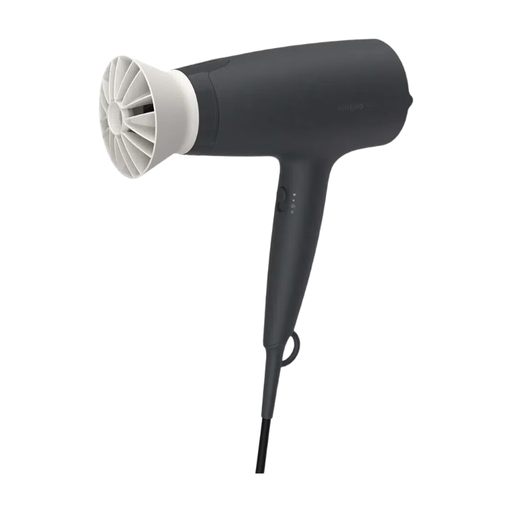
Why it suits this profile: This model offers straightforward essentials for everyday drying, without requiring you to choose a device with complicated smart features.
The product information lists 6 speed settings and 6 temperature settings, so you don’t have to rely on a single hot setting.
1600 W, 220–240 V, 1.8 m cord and a hanging loop.
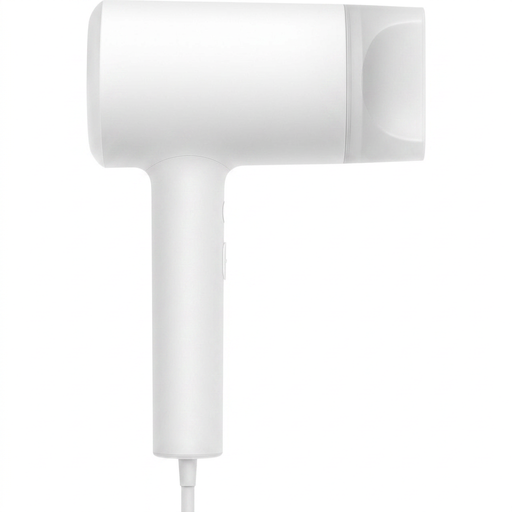
Why it suits this profile: A good choice if you want to combine ionisation, temperature control and a compact design in one everyday appliance.
NTC temperature control and double overheat protection help you avoid relying on high heat alone.
1600 W, stated air speed of 20 m/s, cool-air function and a compact design.
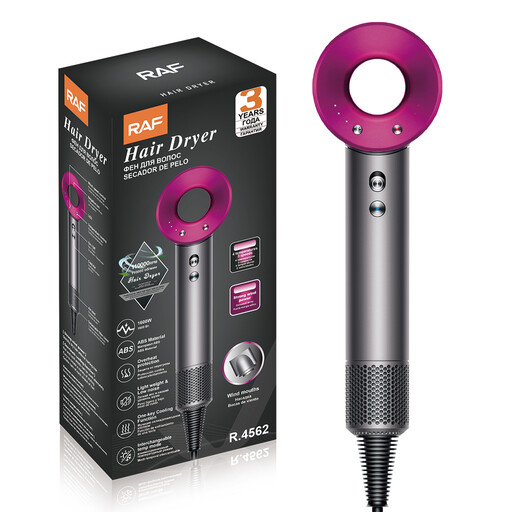
Why it suits this profile: A good option for regular styling, with more control over airflow and heat.
The listed 3 speed settings, 4 temperature settings and overheat protection offer more control than a basic hair dryer with just one setting.
1600 W, 3 speeds, 4 heat settings and a compact design, according to the product information.
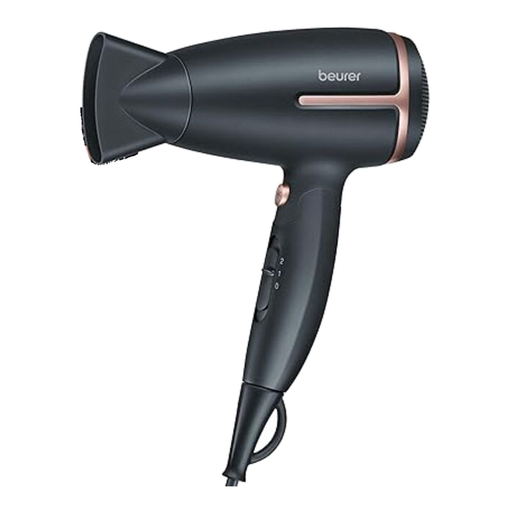
Why it suits this profile: A practical travel hair dryer for anyone short on luggage space who still wants to take 1600 W of power with them.
The foldable handle means a powerful appliance doesn’t have to take up much room in your suitcase.
Approx. 430 g, foldable handle, ionisation function and voltage selection for 110–120 V or 220–240 V.
We’ve put together a complete, up-to-date list of products that meet these strict selection criteria and the applicable European safety requirements.
For many people, 1600 W is enough, particularly when combined with strong airflow and multiple speed settings. Long or thick hair may take longer to dry, regardless of wattage. Use a higher airflow setting to dry your hair first, then lower the heat when styling.
A 1600 W appliance theoretically uses 1.6 kWh if it runs at full power for an hour. In practice, hair dryers are usually used for less time and not continuously on the highest setting. The actual cost therefore depends on how long you use it and your energy tariff.
Lifespan depends on the motor, build quality, frequency of use and maintenance. Regularly clear hair and dust from the air filter, keep the air vents unobstructed and only put the appliance away once it has cooled completely. Stop using it if you notice smoke, a burning smell, unusual noises, or damage to the cord or plug.
