
Vandaag of morgen in huis

Kwaliteit gegarandeerd

Welkomstaanbiedingen ontgrendelen: GRATIS bezorging | Tot 80% korting | Gratis 30 dagen JoyPlus-proefperiode
Download de app
As a Joybuy Product Recommendation Officer, I see customers daily navigating the complex world of high-performance charging accessories. A 140W power bank appears to be the ultimate solution for anyone needing to charge a laptop, tablet, and phone on the go. Yet, common pitfalls can lead to a disappointing purchase. Before you invest, it's essential to see through three widespread myths.
To avoid buyer's remorse, focus on the specifications that truly matter. These are the technical details that determine whether a portable laptop charger lives up to its promise.
A 140W output is specifically designed for the most demanding devices, like a 16-inch MacBook Pro. To actually deliver this power, the power bank must support the PD 3.1 (Power Delivery) standard. Older versions like PD 3.0 are limited to 100W. Without PD 3.1 support, a fast-charging power bank for a MacBook Pro will never charge at full speed, even if the packaging says "140W". Always check that the power bank, your device, and your cable all support the PD 3.1 standard.
A 20,000mAh power bank is a popular choice, but the most accurate and universal measure of capacity is the Watt-hour (Wh). You can calculate this by multiplying the capacity in mAh by the battery's nominal voltage (usually 3.7V) and dividing by 1000.
Example: (20,000 mAh * 3.7V) / 1000 = 74 Wh
This number is crucial. Airlines impose a 100 Wh limit for power banks in carry-on luggage. A 20,000mAh model (around 74 Wh) is therefore almost always permitted and provides enough energy to give a modern laptop a significant boost or even a full charge.
A good power bank for a laptop should have at least two USB-C ports and preferably a USB-A port for older devices. Pay attention to how the power is distributed. A high-quality model, for example, can deliver 100W to a laptop while simultaneously providing 30W to a phone. A power bank with a display is a useful tool here. It shows the real-time input and output power per port and the remaining battery capacity, so you know exactly what's happening. This is also useful for charging an external battery for a Steam Deck or drone.
Not all power banks are created equal. We have selected a few products that fit different user profiles and avoid the pitfalls mentioned earlier.
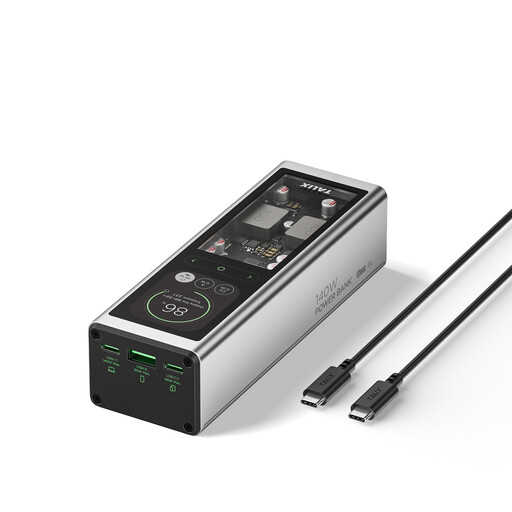
Why This Fits Their Persona: Perfect for those who want to work completely untethered from a power outlet. This power bank charges a MacBook Pro 16", Steam Deck, and smartphone simultaneously, making it ideal for use on the train, in a coffee shop, or on location.
This power bank supports the PD 3.1 standard, ensuring it actually delivers 140W. The smart display shows the exact power distribution, so there are no surprises.
Full 140W output on a single port. The 20,000mAh (74Wh) capacity is suitable for air travel. Three ports for maximum flexibility.
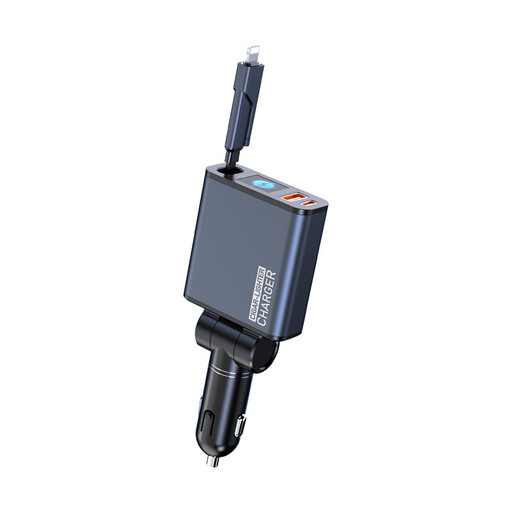
Why This Fits Their Persona: For the professional who is frequently on the road. This car charger turns your vehicle into a mobile office, charging your laptop and phone at full speed between appointments.
This isn't a power bank, but a direct power source. It bypasses the pitfall of weak car chargers that can't even maintain a laptop's battery level. It delivers high power directly.
Very high total output of 160W. The convenient, retractable cables keep the car's interior neat and organized. Supports various fast-charging protocols.
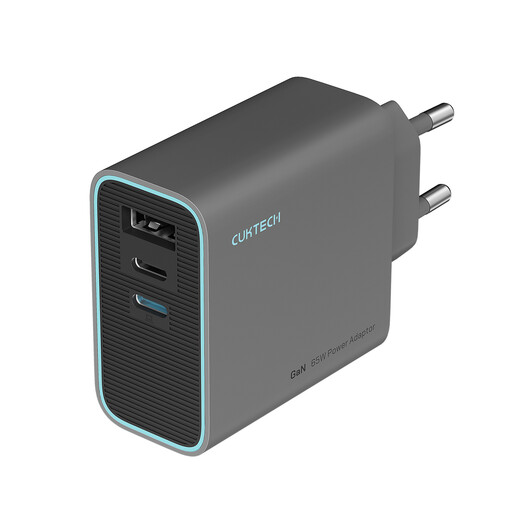
Why This Fits Their Persona: Ideal for anyone who wants a clutter-free desk or a compact charger for their travel bag. This wall charger replaces three separate chargers, powering a laptop, tablet, and phone from a single outlet.
This charger prevents the chaos of multiple adapters. It intelligently distributes power, unlike cheap multi-port chargers that slow down as soon as you connect more devices.
Very compact and foldable design. The 3 ports and smart power distribution make it an efficient all-in-one solution for your desk or bag.
We have compiled a complete, up-to-date list of products that fully meet these strict selection criteria and safety regulations.
Yes, in most cases. A 20,000mAh (approx. 74Wh) power bank can fully charge a laptop like a MacBook Air about once. For a larger laptop like a 16-inch MacBook Pro, it provides a substantial charge (around 50-60%), enough to finish your work. The exact performance depends on the laptop model and the power bank's efficiency.
Yes, the power output in Watts (W) is not the limiting factor, but the capacity in Watt-hours (Wh). Most airlines have a 100 Wh limit for devices in carry-on luggage. A 20,000mAh power bank has a capacity of about 74 Wh, which is well within this limit. You can take it in your carry-on baggage without any issues.
Power Delivery (PD) is a fast-charging standard via USB-C. The main differences are:
