
Vandaag of morgen in huis

Kwaliteit gegarandeerd

Welkomstaanbiedingen ontgrendelen: GRATIS bezorging | Tot 80% korting | Gratis 30 dagen JoyPlus-proefperiode
Download de app
As a Joybuy Product Recommendation Officer, I see people struggle daily to find the right charging solution. Especially when it comes to a powerful 140W laptop power bank, the market is filled with marketing claims that create more confusion than clarity. You're looking for a reliable, portable charger for your laptop, but often end up with a product that doesn't deliver on its promises. Let's uncover the most common pitfalls so you can make an informed choice.
Before you invest in a new power bank, it's important to recognise these common deceptions:
To avoid disappointment, focus on the technical specifications that truly matter. These are the three non-negotiable features for a powerful portable laptop charger.
For modern, demanding laptops, high power output is essential. A 140W laptop power bank that supports the PD 3.1 (Power Delivery) standard is the current gold standard for charging devices like the 16-inch MacBook Pro at full speed. This protocol ensures the power bank and your laptop "communicate" to deliver the maximum safe charging speed. Without PD 3.1, your power bank may not charge your laptop efficiently, despite its high wattage.
While milliampere-hours (mAh) is widely used, Watt-hours (Wh) is a more reliable metric for the actual energy content. It not only helps to compare power banks more accurately but is also crucial for air travel. Most airlines have a 100Wh limit for power banks in carry-on luggage. A 20,000mAh power bank typically has a capacity of around 74Wh (20,000mAh × 3.7V / 1000), which is well within the limit and enough to fully charge most laptops at least once.
A good USB-C power bank should have at least two USB-C ports, with at least one capable of delivering the full 140W output. An additional USB-A port is useful for older devices. A power bank with a display is not just a gimmick; it shows real-time information like the remaining percentage, charging speed per port, and temperature. This gives you complete control and insight into its performance.
Based on these objective criteria, we have selected several products that suit different user profiles.
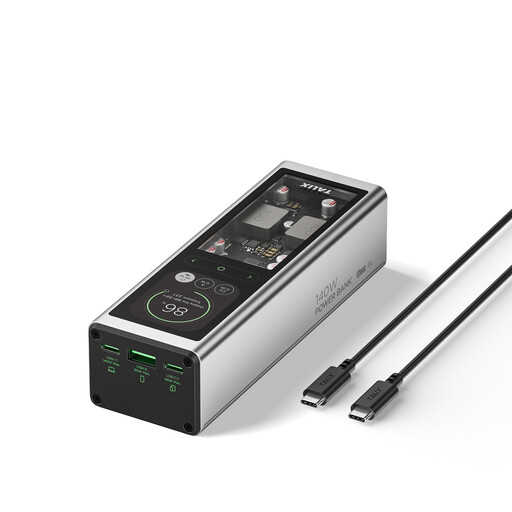
Why This Fits Their Persona: Ideal for content creators and professionals who need to charge a powerful laptop (like a 16-inch MacBook Pro) at full speed on the go. This power bank is designed for maximum performance without compromise.
This model specifies a 140W PD 3.1 output via a single port, avoiding vague "fast-charging" claims. The smart display shows the actual output, offering full transparency on performance.
Delivers the full 140W needed for the most demanding laptops. The three ports (2x USB-C, 1x USB-A) offer flexibility for charging multiple devices simultaneously.
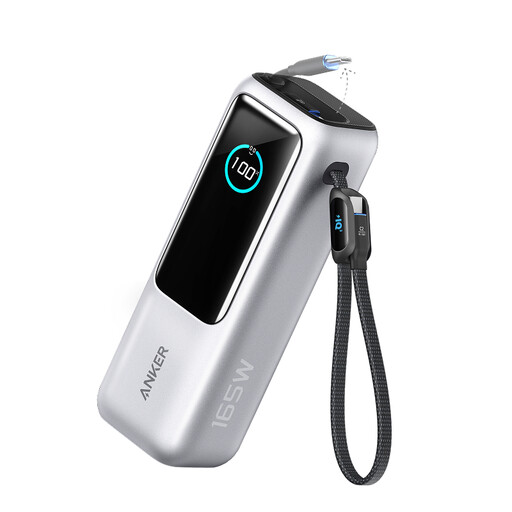
Why This Fits Their Persona: Perfect for gamers and tech enthusiasts who want to charge a laptop, Steam Deck, and phone simultaneously. The large capacity and built-in cables offer maximum convenience.
This model tackles the pitfall of unrealistic port distribution by offering a high total output of 165W, with clear specifications on how it's divided. The large 25,000mAh capacity is realistic for multiple recharges.
The combination of a very high capacity (25,000mAh) and the convenience of two built-in USB-C cables makes this a complete on-the-go solution. You don't need to carry separate cables.
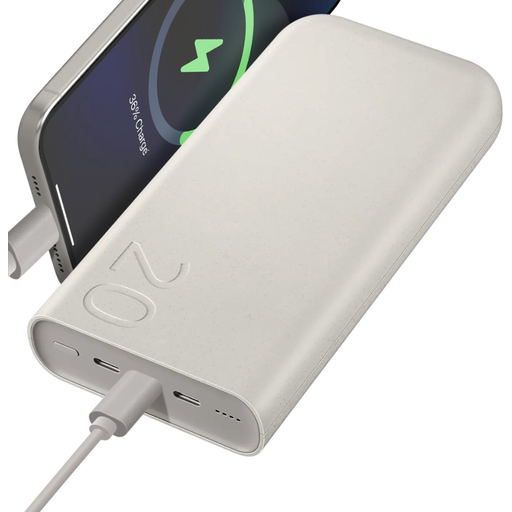
Why This Fits Their Persona: For users with a modern but less demanding laptop (like a MacBook Air or Dell XPS) who are looking for a reliable and efficient charging solution from a well-known brand. 45W is more than sufficient for these devices.
This product is honest about its capabilities. It doesn't claim 140W, but a solid 45W with Power Delivery 3.0. This prevents the disappointment of buying an overpowered (and expensive) power bank for a device that doesn't need it.
Offers an excellent balance between power, capacity (20,000mAh), and reliability. The three USB-C ports allow for charging multiple devices at once.
We have compiled a complete, up-to-date list of products that fully meet these strict selection criteria and local safety regulations.
Yes, in most cases. Airlines look at the capacity in Watt-hours (Wh), not the power output in Watts (W). A power bank of 20,000mAh (approx. 74Wh) or 25,000mAh (approx. 92.5Wh) typically stays under the 100Wh limit for carry-on luggage. To be safe, always check the rules of your specific airline.
Yes. To utilise the full 140W speed, you need a USB-C to USB-C cable that supports the Extended Power Range (EPR) standard. These cables are often labelled as "240W" or "140W" compatible. A standard USB-C cable will likely limit the charging speed to 60W or 100W.
Yes, absolutely. Thanks to Power Delivery (PD) technology, the power bank communicates with the connected device to deliver exactly the right amount of power. A 140W power bank will never overload an iPhone or Android phone; it will charge it at the maximum safe speed that the phone supports.
