
Vandaag of morgen in huis

Kwaliteit gegarandeerd

Welkomstaanbiedingen ontgrendelen: GRATIS bezorging | Tot 80% korting | Gratis 30 dagen JoyPlus-proefperiode
Download de app
When you're building a high-end PC, the power supply unit (PSU) is its very foundation. With the advent of power-intensive components like the NVIDIA 40-series graphics cards, a powerful and reliable PSU is no longer a luxury—it's a necessity. The search for a 1300W PCIE5 power supply, however, can be fraught with pitfalls. Vague marketing terms and confusing specifications make it challenging to make an informed decision. Let's break down the most common missteps to ensure you don't waste money on a PSU that can't support your new system.
Pitfall 1: Relying on outdated standards. Many builders assume that an older, high-wattage power supply with an adapter will suffice for a new graphics card. This is a risky assumption. A power supply for an RTX 4090 needs more than just high wattage; it must support the new ATX 3.0 standard to handle the massive, brief power spikes (transients) without causing your system to shut down. An adapter does not solve this fundamental issue.
Pitfall 2: Misinterpreting the 80 Plus certification. An "80 Plus Gold" label sounds impressive, but for a high-end gaming power supply of 1300W, the difference compared to an 80 Plus Platinum PSU is significant. It's not just about a lower energy bill. Higher efficiency means less wasted energy converted into heat. Less heat leads to quieter operation and a longer lifespan for all the components in your PC.
To make the right choice, focus on a few crucial, non-negotiable specifications. These will determine the performance and reliability of your system.
This is the most critical factor for a modern build. A true ATX 3.0 power supply is specifically designed to handle the power excursions from PCIe 5.0 graphics cards. According to the specification, such a PSU must be able to handle peaks of up to twice the graphics card's nominal power rating. Furthermore, they feature a native 12VHPWR connector, which provides a direct, more stable, and safer connection than using adapters, which represent a potential point of failure.
The 80 Plus certification indicates how efficiently a PSU converts AC power from the wall outlet into DC power for your PC. At 50% load, a Platinum-rated PSU must be at least 92% efficient, whereas a Gold-rated one is at 90%. This may seem like a small difference, but for a system drawing 650W, the Gold PSU generates 72W of heat, while the Platinum PSU produces only 56W. This results in a cooler system and a quiet 1300W power supply, as the fan doesn't have to work as hard.
A fully modular power supply allows you to connect only the cables you actually need. This offers two major advantages:
Not every builder has the same needs. Below is a selection of power supplies suited for different user profiles, based on their objective specifications.
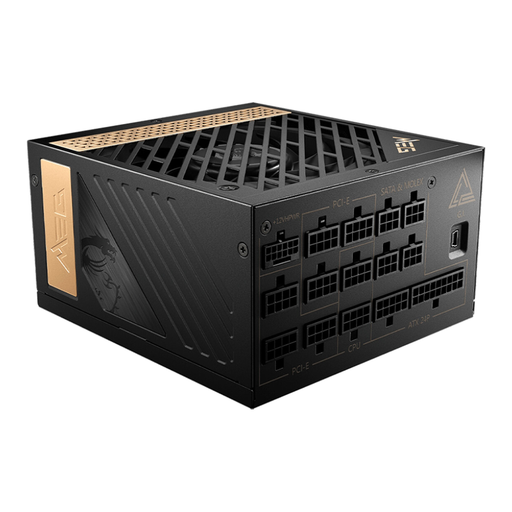
Why This Fits Their Persona: This user is building a no-compromise system with the most powerful components, such as an RTX 4090 and a high-end CPU. Stability, efficiency, and sufficient headroom for overclocking and future upgrades are their top priorities.
This MSI MEG AI1300P is fully ATX 3.0 compliant and has an 80 Plus Platinum certification. It delivers stable power and avoids the pitfalls of outdated standards and inefficiency.
Offers 1300W of continuous power, a native 600W 12VHPWR connector, and a semi-passive fan for silent operation at low loads.
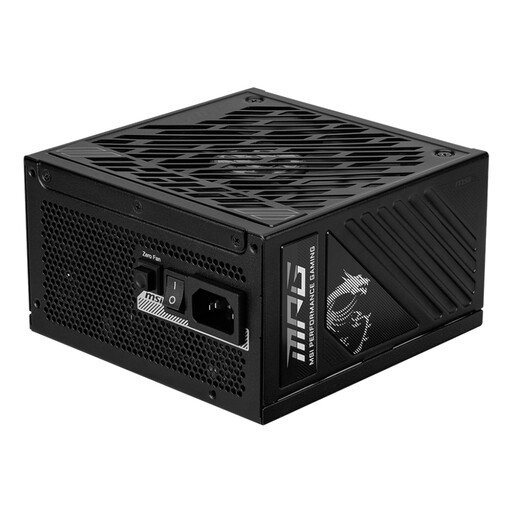
Why This Fits Their Persona: This user is building a powerful system, for instance with an RTX 4080, and is looking for a future-proof power supply without paying for the absolute top-tier model. 1000W is more than sufficient, but the ATX 3.0 standard is a must-have.
It complies with ATX 3.1 and PCIe 5.1 guidelines, allowing you to avoid the adapter pitfall. The 80 Plus Gold certification offers excellent efficiency for this power class.
A fully modular power supply with a compact form factor (150mm deep) that fits in most cases. The semi-passive fan ensures silence under low loads.
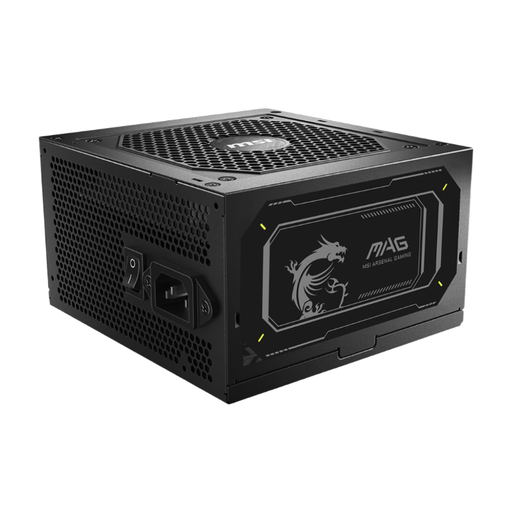
Why This Fits Their Persona: This builder is assembling a mid-range gaming system but wants to be prepared for the future. A 750W PSU is sufficient for now, but PCIe 5.0 support is important for a potential future graphics card upgrade.
It offers an affordable entry point into the ATX 3.1 / PCIe 5.1 ecosystem. This prevents you from needing to buy a new PSU for an upgrade in a few years, sidestepping the pitfall of outdated standards.
An 80 Plus Gold certification and a fully modular design are strong selling points in this price range. The compact 140mm depth ensures broad case compatibility.
We have compiled a complete, real-time list of products that fully satisfy these strict selection criteria and UK safety regulations.
That depends on your components. For a system with a top-tier CPU (like an Intel Core i9 or AMD Ryzen 9) and a flagship graphics card (like an NVIDIA RTX 4090), 1300W provides comfortable headroom for stability under heavy load and for future upgrades. For less demanding builds, such as one with an RTX 4070, an 850W or 1000W ATX 3.0 model is often a more balanced choice.
An ATX 3.0 power supply is fundamentally designed differently. It is built to handle the very high, brief power spikes from modern graphics cards, something older PSUs were not designed for. An older PSU with an adapter can become unstable under these conditions and cause your system to crash. Additionally, the native 12VHPWR connector on an ATX 3.0 PSU provides a cleaner and more physically robust connection.
The noise level depends on two factors: efficiency and fan design. A PSU with high efficiency (Platinum or Titanium) produces less heat, meaning the fan needs to spin less frequently and at lower speeds. Look for models with a "Zero RPM" or semi-passive mode. In this mode, the fan remains stationary under low to medium loads, making the power supply completely silent in many scenarios.
