
Vandaag of morgen in huis

Kwaliteit gegarandeerd

Welkomstaanbiedingen ontgrendelen: GRATIS bezorging | Tot 80% korting | Gratis 30 dagen JoyPlus-proefperiode
Download de app
A home EV charger is no small purchase. You're looking for a safe, efficient, and future-proof solution. But the market is flooded with technical jargon and marketing promises. Especially when choosing an 11kW EV charger with dynamic load balancing, it's easy to fall into a few common traps. As a Joybuy Product Recommendation Officer, I'll help you understand the right specifications so you can make an informed decision that fits your situation.
Before we get to the recommendations, let's look at the two most common mistakes buyers make:
smart charger suddenly becomes a lot less smart.3-phase home EV charger, but your electrical panel isn't prepared for the extra load. The result: the main breaker constantly trips when you turn on the washing machine while charging. This is not only inconvenient but can also be unsafe.A good charging solution prevents these problems. It all comes down to understanding a few core specifications.
You don't need to be an electrician to choose the right 11kW wallbox. Pay attention to the following three points to ensure you make a good purchase.
For most households with a 3-phase connection, a charger with an 11kW output offers an ideal balance. This power is delivered via 3 phases of 16 Amps (3x16A), allowing you to fully charge an average electric car overnight. It's significantly faster than a 1-phase charger (typically 3.7kW or 7.4kW) and distributes the load evenly across your electrical system. Therefore, check if you have or can get a 3-phase main connection. A 16A charger on 3 phases is the technical foundation for 11kW charging.
This is arguably the most important feature for a home electric car charging station. Dynamic Load Balancing continuously measures the total electricity consumption in your home. Are you turning on the oven, washing machine, or kettle? The charger will automatically reduce the charging power to the car. As soon as more power becomes available, the charging speed increases again.
The benefits:
A charger with an app gives you complete control. Look for chargers that work with open platforms (like the Tuya Smart app), which don't require subscription fees. Essential features include:
Below are some charging solutions selected based on their specifications and how they fit different user profiles.
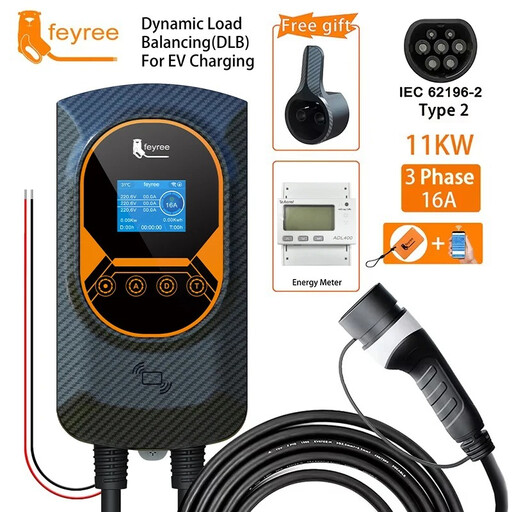
Why This Fits Their Persona: This user seeks the perfect balance of charging speed, safety, and smart features for daily use, without unnecessary complexity or costs. This model delivers exactly that.
The built-in Dynamic Load Balancing feature prevents overloading the electrical panel. Control via the free Tuya app means there are no hidden subscription costs.
A complete solution with 11kW (3-phase) power, DLB, and app control. The IP66 certification makes it suitable for installation in a garage or under a carport.
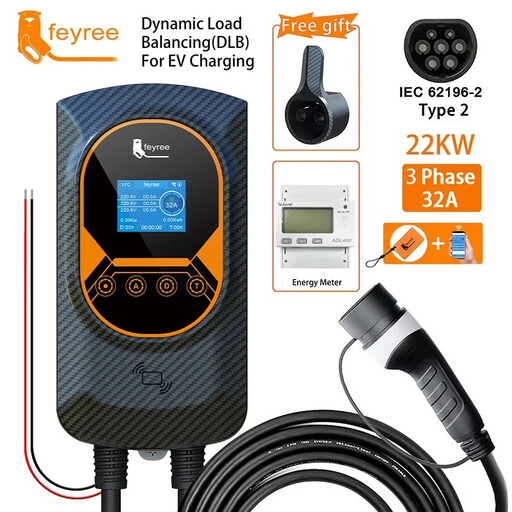
Why This Fits Their Persona: This user has a car that supports 22kW charging or wants to be prepared for the future. Maximum charging speed is a priority, but in a safe manner.
Even with a potential output of 22kW (3x32A), Dynamic Load Balancing ensures the charger never draws more power than is safe for the home's connection.
Offers the highest possible charging speed for home use. Ideal for cars with large batteries or for those who need to top up quickly. The amperage is adjustable via the app.
Why This Fits Their Persona: For this user, minimising charging costs is the top priority. They want to take full advantage of off-peak rates or the output from their solar panels.
The app functionality allows for precise scheduling of charging sessions. This way, charging starts automatically when electricity is cheapest, without you having to get out of bed at night.
Full control over charging costs through smart scheduling and consumption monitoring. The combination with DLB ensures a worry-free and optimised charging experience.
We have compiled a complete, up-to-date list of products that fully meet these strict selection criteria and local safety regulations.
Virtually every electric car with a Type 2 connection can charge at an 11kW station. However, the actual charging speed is determined by the car's own 'onboard charger'. A car with a 1-phase onboard charger limited to 7.4kW will not charge any faster than 7.4kW, even at an 11kW station. Nevertheless, an 11kW charger is a wise and future-proof choice, as more and more cars come standard with an 11kW onboard charger.
With solar panels, Dynamic Load Balancing becomes even more valuable. A smart charging system can be configured to primarily charge the car using the surplus solar energy you generate. On sunny days, you charge your car with your own, self-generated power. This maximises your self-consumption and further reduces your energy bill. This functionality often requires a connection to your smart meter's P1 port.
No, the installation of an EV charger, especially a 3-phase model with DLB, must always be carried out by a certified and licensed electrician. This is a legal requirement for the safety of the installation and a condition for your insurance. The electrician will install a dedicated circuit in the electrical panel, the correct wiring, and the DLB module.
