
Vandaag of morgen in huis

Kwaliteit gegarandeerd

Welkomstaanbiedingen ontgrendelen: GRATIS bezorging | Tot 80% korting | Gratis 30 dagen JoyPlus-proefperiode
Download de app
An 11 kW Type 2 EV charger can be a practical solution if you want to charge your electric car or plug-in hybrid faster at home than you can from a standard socket. However, there’s a bigger difference between a suitable three-phase EV charger and an unsuitable purchase than the wattage on the packaging might suggest.
Look out for these three common pitfalls:
A 400 V EV charger uses three phases. For the TDC ENERGY RAC11, the product specifications state 400 V, three-phase, maximum 16 A at 11 kW. The supplied five-pin 16 A CEE plug is only suitable for a compatible electrical installation.
Check in advance:
Not every EV or plug-in hybrid charges at 11 kW. Some models, for example, limit AC charging power to 3.7 or 7.4 kW. According to the product information, the actual charging speed depends on the vehicle’s onboard charger and the electrical installation.
A Type 2 charging station uses the IEC 62196-2 connector standard, which is common among European electric cars and plug-in hybrids. This makes the charger suitable for vehicles with a Type 2 charging socket, but always check your car’s manual.
A 5-metre cable gives you more flexibility if the charging station can’t be installed right next to the charging port. Also check how the cable is stored. A holder and protective cap help protect the connector from dirt and moisture.
An AC home charging station should do more than simply supply power. According to the TDC ENERGY RAC11 product specifications, its safety features include:
According to the product specifications, the connector is rated IP54 when in the holder and IP65 with the protective cap fitted. This doesn’t mean the entire charging station is waterproof in all conditions. If you’re mounting it outdoors, it’s a good idea to install it in a sheltered spot, fit it correctly and protect it from direct rain. Don’t use a pressure washer or immerse the unit in water.
An RFID EV charger can be useful when several people use the same charging station. The TDC ENERGY RAC11 comes with two RFID cards. According to the product information, RFID control can also work without a network connection. App features use Wi-Fi or Bluetooth and may require a compatible network connection.
A display makes it easier to monitor the charging process. This model’s 3-inch segment LCD shows the charging status and key operating information. That’s useful if you don’t want to keep opening the app.
Be wary of features that aren’t listed in the product specifications, such as dynamic load balancing, automatic electricity cost calculations or solar panel integration. If you need these features, check explicitly that they’re supported. Don’t rely on the word “smart” alone.
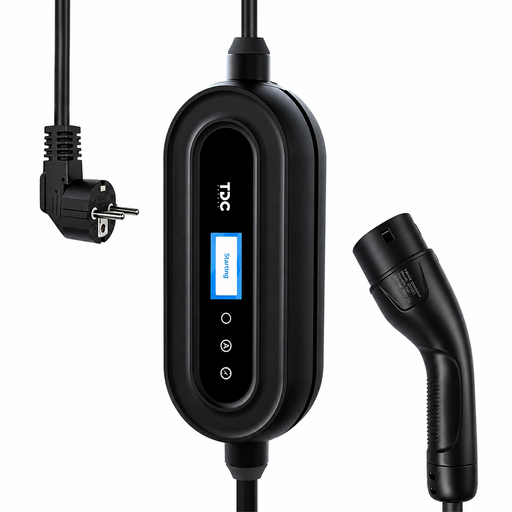
Why it suits this profile: For anyone without a fixed 11 kW installation, or looking for a compact home EV charger they can use in different locations.
The charging power is clearly specified as 3.5 kW at 230 V, with adjustable current settings of 8, 10, 13 and 16 A. This helps you avoid buying an 11 kW charger without a suitable three-phase connection.
Type 2 connector, 5-metre cable, Wi-Fi and Bluetooth, LCD screen and IP66 rating according to the product specifications.
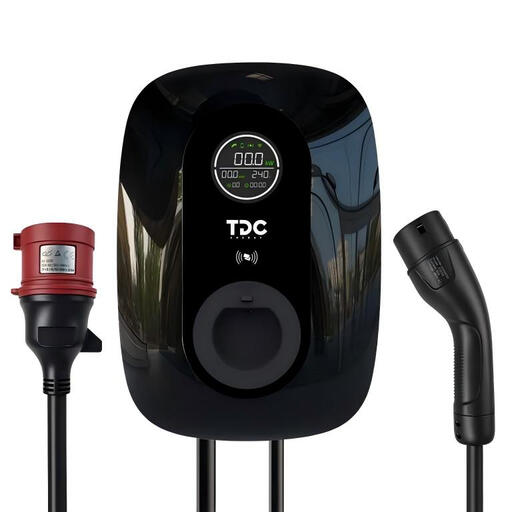
Why it suits this profile: For EV drivers with a suitable 400 V three-phase connection who want a fixed wall-mounted charging station with extensive controls.
The product specifications explicitly state 400 V, three-phase, 16 A and a five-pin 16 A CEE connection. RFID and app control are also listed separately.
11 kW AC charging, 5-metre Type 2 cable, 3-inch display, two RFID cards and several safety features according to the product description.
Why it suits this profile: For households, small businesses or shared car parks where several users need access to one charging point.
As well as app control, the charger lets you start a session using RFID. This means an active network connection isn’t the only stated way to start charging.
Two RFID cards, Wi-Fi and Bluetooth, 11 kW charging power and wall mounting in a compact 368 × 256 × 133,3 mm housing.
We’ve put together a complete, up-to-date list of products that meet these strict selection criteria and comply with the applicable European safety regulations.
Have a qualified electrician install and commission a fixed 11 kW Type 2 EV charger. They can assess whether your consumer unit, residual current protection, earthing and cable cross-section are suitable. Also check whether using household appliances at the same time could cause an overload.
To help your charger last longer:
A suitable 400 V three-phase connection is needed for 11 kW at 16 A. Ask an electrician to check whether your existing installation supports this and whether sufficient capacity is available.
Its lifespan depends on installation, use, weather conditions and maintenance. Protect the connector, avoid physical damage and, if possible, install an outdoor charger in a sheltered spot. The TDC ENERGY RAC11 comes with a two-year warranty; your statutory warranty rights may also apply.
The cost depends on your electricity tariff, your car’s energy consumption and any installation costs. An 11 kW charging rate reduces charging time, but it doesn’t make electricity cheaper per kilowatt-hour. So check your energy tariff and your car’s actual AC charging power too.
