
Vandaag of morgen in huis

Kwaliteit gegarandeerd

Welkomstaanbiedingen ontgrendelen: GRATIS bezorging | Tot 80% korting | Gratis 30 dagen JoyPlus-proefperiode
Download de app
If you're serious about table tennis—whether you run a club, coach at a school, or train intensively yourself—you know how quickly you can burn through your supply of balls. Constantly replenishing them can be a significant expense. That's why finding a durable and cost-effective bulk pack of table tennis balls is essential.
This guide is designed to help you make an informed choice. We'll look at the specifications that truly matter for training purposes and provide several recommendations for a 100-pack of table tennis balls that offer an excellent balance of quality and price.
Before you purchase a large quantity of balls, it's wise to consider a few key factors. This will help you make a purchase that matches your specific training needs.
Previously, table tennis balls were made of celluloid, but today the standard for 40+ table tennis balls is ABS (Acrylonitrile Butadiene Styrene). ABS table tennis balls are not only safer (less flammable) but, according to manufacturers, also more durable and consistent in their bounce. For intensive training sessions where balls are hit thousands of times, the wear resistance of ABS is a key advantage.
Table tennis balls are often classified with stars (1, 2, or 3). Three-star balls are designated for official competitions and meet the strictest quality standards. For training purposes, such as multi-ball drills or filling a ball robot, 1-star table tennis balls or even balls with no star rating are often the most logical choice. These table tennis training balls are designed for durability and consistent performance under high-intensity use, at a lower price per ball.
Modern ABS balls are available in seamed or seamless versions. Seamed balls are produced from two halves that are glued together. This manufacturing process, when executed correctly, can ensure highly consistent roundness and a stable centre of gravity. The recommended Double Fish table tennis balls in this guide utilise this technology.
Based on product specifications focused on durability and training volume, we have highlighted several options for a 100-pack of ping pong balls.
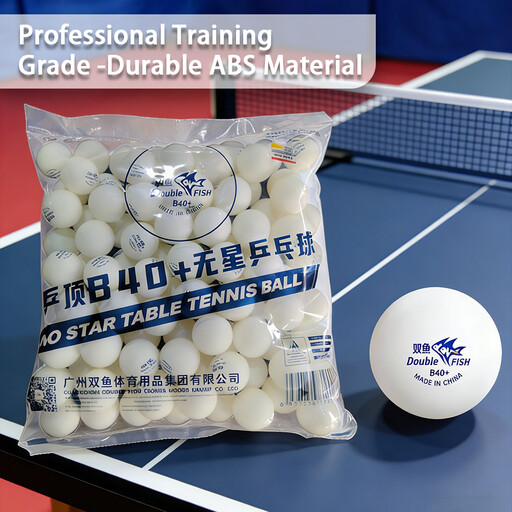
Why It Stands Out According to the manufacturer, Double Fish, this model is designed to withstand thousands of hits during high-intensity training sessions. The focus here is purely on durability and a reliable, stable flight path.
Advantages
Who Is This For? For table tennis clubs, schools, and players looking for the most cost-effective solution for very high-volume training, such as with a ball robot or for multi-ball drills.
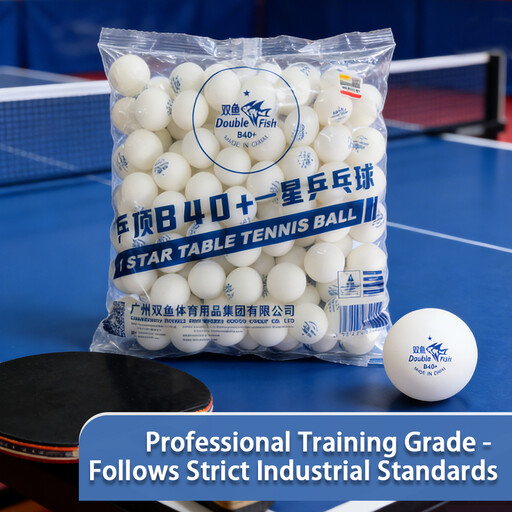
Why It Stands Out This 1-star table tennis ball meets stricter industry standards than the no-star version. The manufacturer states that this ball retains its shape, even after hours of intense practice and repeated smashes.
Advantages
bulk pack of table tennis balls.Who Is This For? For serious amateur players and coaches who need a reliable and consistent ball for targeted drills but don't want to pay the premium for a competition-grade ball.
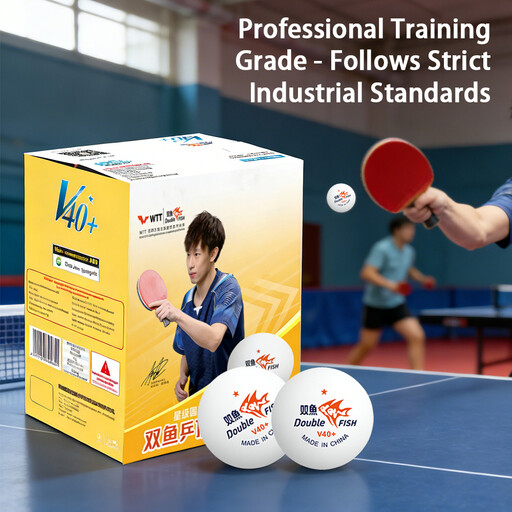
Why It Stands Out This model is positioned as a ball for both training and lower-level competition. The manufacturer highlights the ball's precision, featuring a stable centre of gravity to prevent deviations and improve placement.
Advantages
Who Is This For? For players and clubs who want to use a single type of ball for both intensive training and non-sanctioned matches or league play. A great all-around choice.
While this selection focuses on bulk packs for training, we understand you might be looking for other sports equipment. Check out our wider selection in the white canvas category for more options.
What is the difference between 40mm and 40+ table tennis balls? The "40+" designation refers to the introduction of the plastic (ABS) ball, which replaced the older 40mm celluloid ball. The 40+ table tennis balls are fractionally larger and heavier. This results in slightly lower ball speed and spin, which makes rallies longer and easier for spectators to follow. This is now the official standard.
How many table tennis balls do I need for training? This depends on your training method. For multi-ball training, where a coach or partner feeds balls in rapid succession, a supply of 100 to 200 balls is a good starting point. A ball robot typically also requires at least 100 balls to be effective. For a club, a 100-pack of table tennis balls is an efficient way to replenish stock.
Are more expensive balls always better for training? Not necessarily. For training sessions where volume and repetition are key, durability and a predictable bounce are more important than the perfect aerodynamics of an expensive three-star competition ball. Table tennis training balls are specifically designed for this purpose and offer the best value for money for daily, intensive use.
