
Vandaag of morgen in huis

Kwaliteit gegarandeerd

Welkomstaanbiedingen ontgrendelen: GRATIS bezorging | Tot 80% korting | Gratis 30 dagen JoyPlus-proefperiode
Download de app
A 100-inch television is the centrepiece of your home theatre or presentation space. But to unlock its full potential, a standard stand is often not enough. A swivel wall mount offers the flexibility you need. However, the market is flooded with options, and the wrong choice can lead to a crooked TV, damaged walls, or worse. Before you invest, it's crucial to know what to look for and which common pitfalls to avoid.
Choosing a wall mount might seem straightforward, but for a heavy and large screen of 85, 100, or even 110 inches, there are unique risks involved. These are the most common missteps:
To avoid these pitfalls, focus on the specifications that truly matter. These are the non-negotiables for a heavy-duty TV mount.
For a TV of 100 inches or more, a load capacity of less than 100 kg is often insufficient, especially for a full-motion TV mount. When the arm is fully extended, the leveraged force on the wall and the mount increases dramatically. A model with a capacity of 125 kg or more, made from high-grade steel, provides the structural integrity needed to keep your investment securely on the wall. Always check your TV's weight and choose a mount with a significant safety margin.
VESA is the standard distance between the four mounting holes on the back of your TV, expressed in millimetres (width x height). For a wall mount for a large TV, patterns like 600x400 mm, 800x400 mm, or even VESA 800x600 are common. Consult your television's manual to find the exact VESA size and verify that the mount supports this pattern. Some mounts offer a wide range of compatible patterns, making them a future-proof choice.
A true swivel and tilt TV mount offers more than just a minor adjustment. Look for the following specifications:
Based on these critical specifications, we have selected a few products that suit different user profiles.
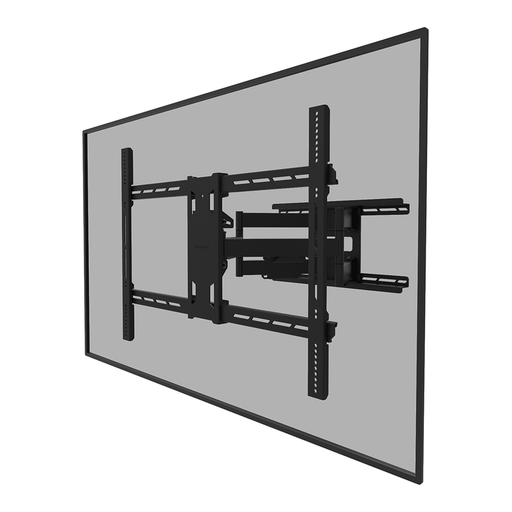
Why This Fits Their Persona: Ideal for those who want maximum flexibility in a living or media room. With this mount, you can effortlessly swivel an 85-inch TV or larger from the seating area to the open-plan kitchen, ensuring you have the perfect viewing angle everywhere.
Tackles the 'swivel myth' with a true ±45° swivel angle and an extendable arm up to 70 cm. Its 125 kg load capacity provides a safe margin, even for the heaviest screens.
Full range of motion (swivel, tilt, rotate) and broad VESA compatibility up to 800x600 mm. Includes cable management for a clean finish.
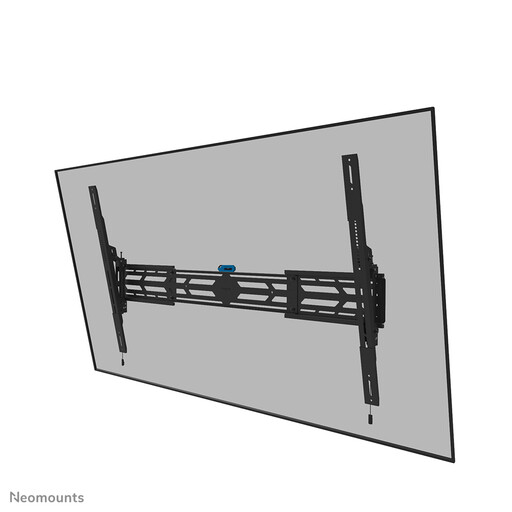
Why This Fits Their Persona: Perfect for AV installers and businesses mounting 110-inch screens in public spaces or conference rooms. Here, security, durability, and theft prevention are the priority.
Eliminates any concerns about weight with an extreme load capacity of 160 kg. The lockable feature (padlock not included) prevents theft, a common risk in commercial environments.
Unique ability to install the screen in either portrait or landscape mode. The mount is tiltable, but note: it is not fully swivel-capable like a full-motion model.
We have compiled a complete, up-to-date list of products that fully meet these strict selection criteria and safety regulations.
No, this is strongly discouraged. A drywall (also known as plasterboard or a hollow wall) is not designed to support the weight and leveraged force of a heavy, extendable TV mount. Installation must always be done on a solid, load-bearing wall made of concrete, brick, or on the wooden studs of a frame wall. Mounting on a hollow wall requires professional reinforcement within the wall itself.
VESA is a global standard that defines the distance between the mounting holes on the back of a television. It is specified as 'width x height' in millimetres. For large TVs, this is crucial because their size and weight require a perfect, stable connection. A VESA 800x600 mount is designed for the specific hole patterns of very large screens. A mismatch means the mount simply will not fit or will be unsafe.
The effective swivel angle depends on the width of your TV and the arm length of the wall mount. A 100-inch TV is approximately 220 cm wide. To achieve a 45-degree swivel, the centre of the TV must extend far enough from the wall so that the edge of the screen does not hit the wall. A mount with an arm length of 70 cm or more is typically required for this. Do not expect a 90-degree rotation; this is physically impossible without an extremely long arm.
