
Vandaag of morgen in huis

Kwaliteit gegarandeerd

Welkomstaanbiedingen ontgrendelen: GRATIS bezorging | Tot 80% korting | Gratis 30 dagen JoyPlus-proefperiode
Download de app
Coconut water is popular as a tropical thirst quencher, a post-workout drink and an alternative to fizzy drinks. Yet packaging can sometimes look more alike than the ingredients lists suggest. A product with a coconut on the front is not automatically 100% coconut water. Some drinks contain sugar, syrup, carbonation or only a proportion of coconut water.
If you are buying coconut water online in the Netherlands, it is therefore worth looking beyond the flavour or attractive packaging. Pay particular attention to the ingredients, nutritional values, volume per pack and storage instructions. This will help you find a product suited to your everyday routine, workouts or household.
The terms coconut drink, coconut water and coconut water drink are not always used in the same way. So check the ingredients list. For natural coconut water, coconut water is generally listed as the only ingredient. Examples include products such as Grace, IF, FOCO and Chaokoh.
A recipe containing, for example, ‘98.5% coconut water and cane sugar’ is different from coconut water with no added sugar. A drink containing coconut extract, glucose-fructose syrup or preservatives is also a different product choice.
‘No added sugar’ does not mean that the drink is sugar-free. Coconut water naturally contains carbohydrates and sugars. The nutritional table often shows around 4 to 5 grams of sugar per 100 ml, depending on the brand and recipe.
That is why you should compare the of which sugars value per 100 ml. This makes packs easier to compare than relying solely on claims on the front.
A 1-litre carton of coconut water is convenient for home use, smoothies or several glasses. However, once opened, the carton must be refrigerated and consumed within the period stated on the packaging. For one person, a multipack of smaller portions may be more practical.
Also check the total volume. A box of 12 x 1 litre contains 12 litres, whereas 12 x 330 ml contains just 3.96 litres. A low price per box therefore tells you very little unless you calculate the price per litre or per 100 ml.
Start by choosing the recipe that suits your preferences:
A short ingredients list makes it easier to assess the contents. Claims such as ‘pure’, ‘natural’ or ‘tropical’ are less informative than the legally required product information on the label.
Coconut water naturally contains minerals, including potassium. Some brands describe their product as coconut water with electrolytes. For such claims, check which minerals are actually listed in the nutritional information and in what quantities.
According to Cocomax’s own product information, the product naturally contains electrolytes. According to its own product description, FOCO lists five electrolytes: potassium, sodium, calcium, phosphorus and magnesium. Chaokoh’s product information specifies, among others, potassium, magnesium, phosphorus and calcium per 100 ml.
This information is useful for comparison, but it does not automatically make coconut water more suitable than water for every situation. During intense or prolonged exercise, diet, sweat loss and total fluid intake also play a role.
A 1-litre carton is practical when several people are drinking it or when you use coconut water in a smoothie. Smaller sizes are more convenient when you are out and about, at work or carrying a sports bag. You generally do not need to store 310 ml cans or 330 ml cartons again once they have been opened.
Also check:
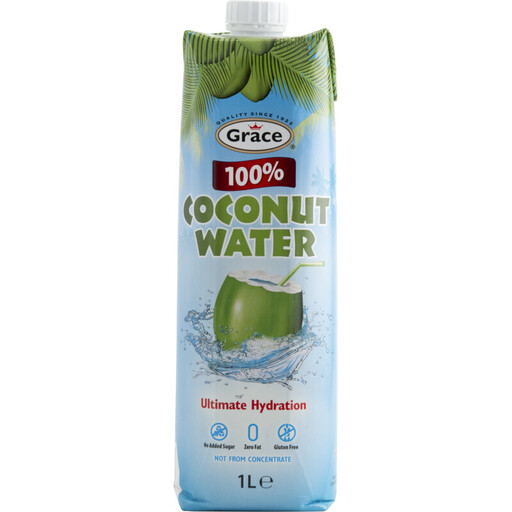
Why it suits this profile: A straightforward 1-litre format for anyone who wants to try a single pack first, without immediately buying a large box.
According to the product information, it consists of coconut water and contains no added sugar. The nutritional information states 5 g of sugars per 100 g.
1 litre of product, 0 g of fat per 100 g and best served chilled for everyday use.
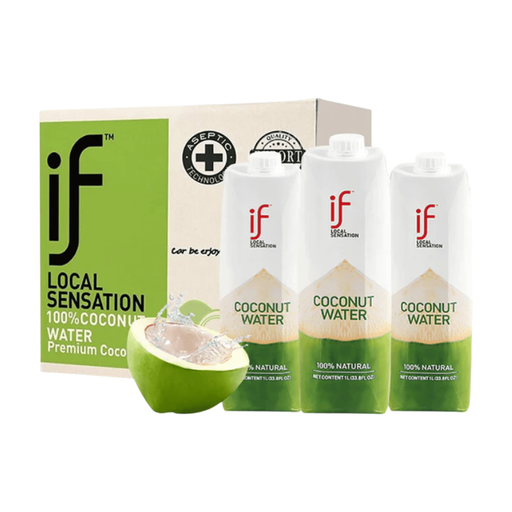
Why it suits this profile: Ideal for fans of Thai coconut water who want to stock up at home, with twelve 1-litre cartons.
According to the product information, the ingredients list states coconut water (100%). The description does not mention added sugar, colourings or preservatives.
Thai young coconut listed as the origin, 1-litre cartons and 21 kcal per 100 ml according to the product information.
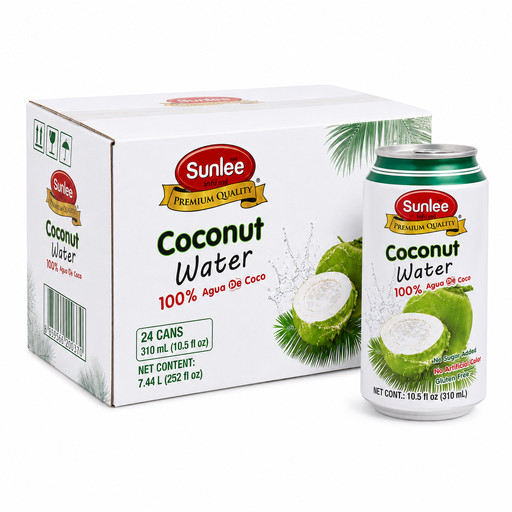
Why it suits this profile: Convenient portions for sport, the office, picnics or households where not everyone drinks at the same time.
According to the product description, this is 100% coconut water with no added sugar and no artificial colourings.
24 portions of 310 ml, 16 kcal per 100 ml and suitable for storing unopened at room temperature according to the product information.
We have compiled a complete, up-to-date list of products that fully meet these strict selection criteria and the applicable European safety regulations.
For coconut water for sport, small packs are practical when you are on the go. However, check the sugar and salt content, and use the drink as part of your overall fluid and nutritional intake. For short, moderate exercise, water is often a sensible choice too.
For home use, Cocomax 12 x 1 litre, Grace 8 x 1 litre and Vietcoco 12 x 1 litre are examples of value packs. Before buying, calculate the price per litre and check that you have enough fridge space.
A product such as Cocomax 12 x 500 ml offers the same type of portioning in smaller cartons. This can help reduce waste at parties or in a family household, as you do not have to open a full 1-litre carton every time.
No. Even without added sugar, coconut water can naturally contain sugars. Check the nutritional table per 100 ml. The amount varies by brand and product.
This varies by product. Many cartons must be refrigerated after opening and used within 2 to 3 days. According to the product information, Chaokoh states a maximum of 7 days after opening. Always follow the storage instructions on the packaging of your specific product.
A multipack can be practical or cost-effective, but compare the price per litre. A box with 24 cans of 310 ml has a different total volume from a box containing 12 cartons of 1 litre. Also consider your consumption and the storage space available.
