
Vandaag of morgen in huis

Kwaliteit gegarandeerd

Welkomstaanbiedingen ontgrendelen: GRATIS bezorging | Tot 80% korting | Gratis 30 dagen JoyPlus-proefperiode
Download de app
A smoke detector is not a gadget; it's a necessity. Since legislation was tightened, almost every home has one. Choosing a model with a 10-year battery seems logical: you install it and don't have to think about it for a decade. However, there are pitfalls that can turn your purchase into a disappointment or, worse, a false sense of security. Before you make a decision, it's important to know what to look for.
Common marketing claims can be misleading. Think of "extra-long lifespan" when it's not a sealed 10-year battery, or a "smart" detector that becomes completely useless during an internet outage. Another common mistake is ignoring certification, leading you to buy a product that doesn't meet European safety standards.
To make the right choice, you don't need to sift through a technical manual. Focus on three key points that distinguish a reliable fire alarm from an untrustworthy device.
The term "10-year battery smoke detector" should ideally mean a built-in, sealed lithium battery that lasts the entire lifespan of the detector. This guarantees ten years of uninterrupted operation without the risk of a dead battery because you forgot to replace it. Models with replaceable batteries are often cheaper to buy, but require annual discipline and additional costs. For peace of mind and safety, a sealed 10-year battery is the most practical choice.
This isn't a suggestion, but a strict requirement. A smoke detector sold in Europe must be EN 14604 certified. This certification mark guarantees that the device meets stringent requirements for manufacturing, performance, and reliability. A detector without this certificate offers no guarantee of proper operation and is not recognised by insurance companies. Always check for this on the packaging or in the product specifications.
Smoke detector technology has evolved significantly in recent years. Your choice depends on your living situation:
Based on these criteria, we have selected a few models that suit different user profiles.
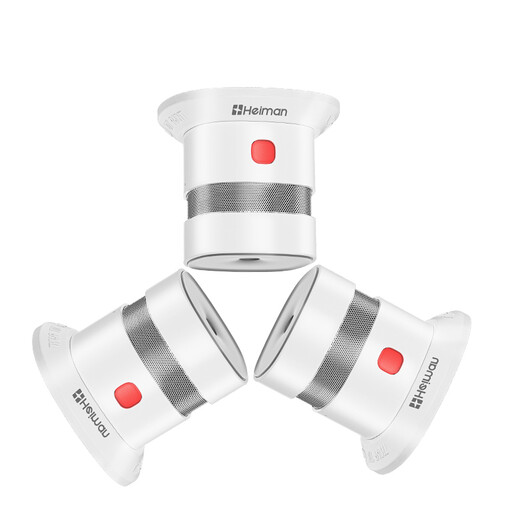
Why This Fits Their Persona: For those seeking a reliable, 'install and forget' solution. No complex setup or app, just pure functionality for the next ten years. Ideal for every floor of your home.
This detector has a sealed 10-year battery, so no annual replacements are needed. It is fully EN 14604 certified, which guarantees its reliability.
Compact and discreet design. The photoelectric sensor is effective for smouldering fires and is less likely to cause false alarms from cooking fumes.
![Aqara Smoke Detector [EU] Offline, SD-S01D](https://images4.joy-sourcing.com/product/s512x512_jfsintlpro-000-product/t1/4294967296/4718592/6109836064365/241379/69704519Edcd2852d/42b10752b5083d5e.png)
Why This Fits Their Persona: Perfect for those who want to integrate their fire safety into a smart home system. Receive instant push notifications on your phone upon smoke detection, wherever you are. Requires a compatible hub.
Although this is a smart smoke detector, its loud local alarm (85 dB) also functions without an internet connection. This means basic safety is not dependent on your Wi-Fi.
Operates on the stable Zigbee protocol and can be linked to other smart devices (e.g., turning on lights during an alarm). The battery has a lifespan of up to 10 years, according to the manufacturer.
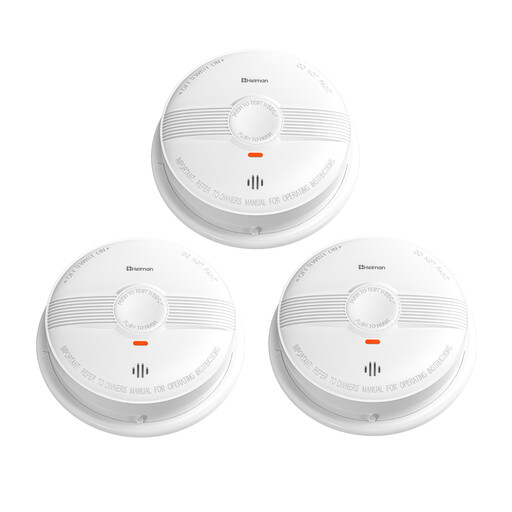
Why This Fits Their Persona: Ideal for securing an entire house, office, or multiple apartments. When one detector goes off, all interlinked units sound the alarm. This set of three is a great starting point for complete coverage.
These interlinked smoke detectors create their own wireless network and are not dependent on Wi-Fi. The EN 14604 certification applies to each unit, ensuring safety and regulatory compliance.
Wirelessly interlinkable up to 40 units. The 10-year battery and the convenient hush button for temporarily silencing false alarms make it a very user-friendly solution.
We have compiled a complete, up-to-date list of products that meet these strict selection criteria and Dutch safety regulations.
As of July 1, 2022, a working smoke detector is mandatory on every floor of a home and in enclosed spaces that are part of an escape route. The law does not specify a 10-year battery life, but it is highly recommended for convenience and continuous safety. The most important thing is that the detector is always functional. All smoke detectors must comply with the EN 14604 standard.
Place the smoke detector on the ceiling, preferably in the middle of the room and at least 50 cm (20 inches) away from walls or corners. The most important locations are the hallway and landing on each floor, as these are the most likely escape routes. Avoid installation directly in the kitchen or bathroom; steam and cooking fumes can cause unwanted alarms.
Interlinked smoke detectors are connected to each other. If one detects smoke, all detectors in the house will sound an alarm. This ensures you hear the alarm loudly and clearly everywhere. A smart smoke detector connects to the internet and sends a notification to an app on your phone. This way, you are alerted even when you are not at home. Some smart models can also be interlinked.
