
Vandaag of morgen in huis

Kwaliteit gegarandeerd

Welkomstaanbiedingen ontgrendelen: GRATIS bezorging | Tot 80% korting | Gratis 30 dagen JoyPlus-proefperiode
Download de app
Whether it's a flat tire or a seasonal tire change, every car owner will eventually need a reliable jack. The search for a good 1-ton scissor jack may seem simple, but in practice, it's more challenging. Many jacks make big promises but fall short at critical moments. Before you invest in a tool meant to guarantee your safety and that of your car, it's crucial to understand the common pitfalls.
Many car owners unknowingly make choices that lead to frustration or even dangerous situations. These are the most common mistakes:
A good jack is an investment in convenience and safety. Let's look at the specifications that truly matter.
To avoid a bad purchase, focus on the technical details that separate a reliable tool from a piece of useless metal.
The lifting capacity, expressed in tons (1 ton = 1,000 kg), is the most important safety factor. A 1-ton scissor jack is suitable for many compact and mid-size cars.
The lifting range determines whether the jack will fit under your car and if it can lift the car high enough to clear the wheel.
A good tire change jack must be stable and easy to operate.
Not all jacks are created equal. We have selected several options that suit different types of users and their cars, based on objective specifications.
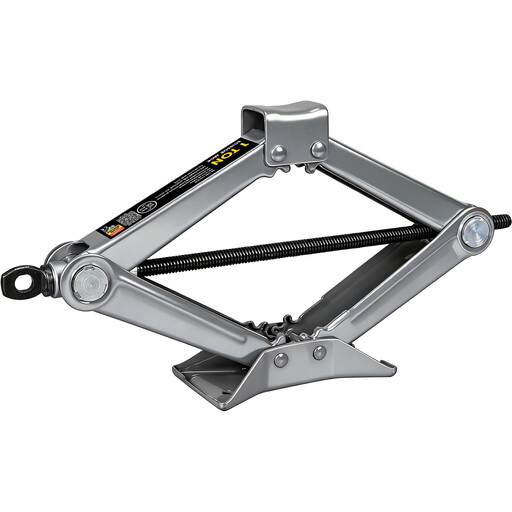
Why This Fits Their Persona: Ideal for owners of sedans and compact SUVs who need a reliable, compact jack for emergencies or the annual tire change. It's easy to store and simple to use.
With a starting profile of just 88 mm, this jack fits under almost any standard car, avoiding the "it doesn't fit" trap. The forged steel construction provides the necessary stability.
The ultra-low profile combined with the foldable design makes it highly versatile and easy to store in the trunk. Operation is smooth and requires little effort.
Why This Fits Their Persona: Specifically for the car enthusiast with a lowered chassis or sports car. This jack is designed as a true jack for lowered cars, where standard models fail.
This model is the solution to the most common frustration: a jack that won't fit under the car. The ultra-low profile of 88 mm is specially designed for vehicles with minimal ground clearance.
It combines a very low starting height with a respectable lifting range of up to 380 mm. This makes it not only suitable for low cars but also functional enough for most jobs.
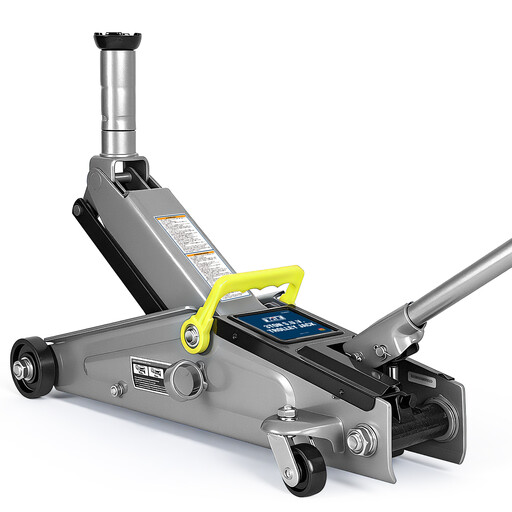
Why This Fits Their Persona: For those who do frequent work or own a heavier vehicle (SUV, MPV). A hydraulic jack offers more speed, convenience, and a higher lifting capacity for more intensive use.
Prevents the risk of overload with heavier vehicles thanks to a 3-ton capacity. The heavy-duty steel construction and hydraulic system provide superior stability and safety.
The hydraulic mechanism makes lifting significantly faster and easier than with a scissor jack. The wide lifting range (150-530 mm) makes it suitable for a broad array of vehicles, including SUVs.
We have compiled a complete, up-to-date list of products that fully meet these strict selection criteria and European safety regulations.
Check your car's total weight on the vehicle registration document. As a rule of thumb, choose a jack that can handle at least 60-75% of this weight. For a 1,600 kg car, a 1-ton (1,000 kg) jack is insufficient. A 1.5- or 2-ton jack would be a safer choice.
Yes, provided it is used correctly. Ensure the car is on a flat, hard surface and the parking brake is engaged. Only place the jack on the manufacturer-specified jacking points. For extra safety, especially if you are working under the car, always use jack stands. A jack is meant for lifting; a jack stand is meant for supporting.
The correct jacking points are reinforced sections of the chassis, specifically designed to bear the car's weight. These points are usually indicated by a notch or marking along the sill, just behind the front wheel or in front of the rear wheel. Always consult your car's owner's manual for the exact locations. Placing the jack in the wrong spot can cause damage to the bodywork.
