
Vandaag of morgen in huis

Kwaliteit gegarandeerd

Welkomstaanbiedingen ontgrendelen: GRATIS bezorging | Tot 80% korting | Gratis 30 dagen JoyPlus-proefperiode
Download de app
A 1.7-litre glass kettle is on many wish lists. It's a stylish addition to any kitchen, and you can see exactly what's happening inside. But the popularity of this appliance has a downside: the market is flooded with models that look better than they perform. Before you make a choice, it's wise to know the common pitfalls.
Many buyers fall into one of these three common traps:
transparent kettle to avoid contact with plastic. Yet, in many models, the lid, filter, or sensor housing on the inside is made of plastic that comes into direct contact with boiling water.A smart purchase starts with recognising these marketing tricks and focusing on the specifications that truly matter.
To avoid a bad buy, you don't need to sift through technical manuals. Pay attention to the following three points, and you'll immediately separate the wheat from the chaff.
This is perhaps the most important point. A borosilicate glass kettle is made from the same type of glass found in laboratories. Its key feature is high resistance to thermal shock. This means the material won't crack if you rinse the hot jug with cold water. It's stronger, safer, and lasts significantly longer than regular glass. If borosilicate glass isn't explicitly mentioned, be wary.
A fast 2200W kettle is a good indicator of performance. A power rating of 2200 watts is a solid benchmark for a 1.7-litre model. With this, a full kettle should boil in about 3 to 4 minutes. A lower wattage (e.g., 1500W) simply means you'll have to wait longer. For a busy household where every minute counts in the morning, a power rating around 2200W is a practical requirement.
Every kettle sold in the UK must have a kettle with auto shut-off; this feature turns the appliance off as soon as the water boils. But an equally important feature is boil-dry protection. This sensor prevents the kettle from turning on if there is no (or too little) water inside. This protects the heating element from burning out and significantly reduces the risk of fire. Always check that both features are present.
To make the points above more concrete, we'll highlight a model designed with these key features in mind.
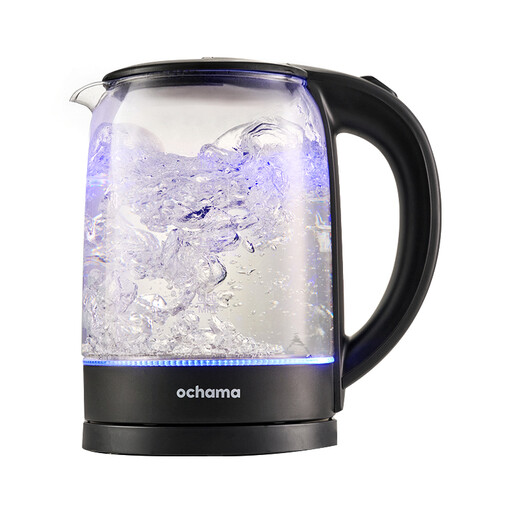
Why This Fits Their Persona: Perfect for a busy household that values both speed and style. The 1.7-litre capacity is ample for tea, coffee, or preparing pasta water for the whole family. The transparent design with blue LED lighting makes it a modern addition to the countertop.
According to its specifications, this model is made of durable borosilicate glass, which minimises the risk of cracking from heat. The stated power of 2200W is geared for rapid boiling, and the focus is on the glass body to ensure water quality.
The combination of a powerful 2200W element for speed and the built-in safety of auto shut-off and boil-dry protection. The kettle with LED light provides a clear visual indication when the appliance is in use.
We have compiled a complete, up-to-date list of products that meet these strict selection criteria and UK safety regulations.
Each material has its pros and cons. Glass is popular because it doesn't impart any flavours or odours, keeping the taste of your tea or coffee pure. Additionally, you can see limescale buildup immediately and deal with it. Stainless steel is very robust and durable but can impart a slight metallic taste in some models. Plastic is often the cheapest option but can absorb odours over time, and there are concerns about the release of microplastics.
Limescale is highly visible in a designer glass kettle. Fortunately, it's easy to remove. Fill the kettle with a mixture of equal parts water and white vinegar. Let it sit for an hour or bring it to a brief boil. Empty the kettle and rinse it thoroughly several times with clean water. Your kettle will be clear and ready for use again.
The glass itself is designed to last a long time and is very resistant to breakage under normal conditions. The ultimate lifespan of the kettle is usually determined by its electronic components, such as the heating element or the automatic shut-off switch. With a quality model that is well-maintained (regularly descaled), you can expect a lifespan of several years.
