
Same-day & Next-day Delivery

Quality Guaranteed

Unlock Your Welcome Offers: FREE Delivery | Up to 80% OFF | Free 30-day JoyPlus trial
Download the APP
A spool of 1.75 mm 3D filament might seem straightforward to choose at first glance. Yet small differences in material, diameter, moisture content and print settings can lead to failed prints, clogged nozzles or unnecessary costs. This applies to home users and hobbyists, but also to students, model makers and designers who regularly produce prototypes.
A filament pack may advertise a print speed of up to 300 mm/s for fast 3D printers. That does not mean every FDM printer can handle this speed. The actual speed also depends on the hotend, nozzle, maximum volumetric flow, cooling, firmware and the model itself.
According to eSUN's product information, ePLA-Basic is developed for fast printing and mentions a flow rate of up to 35 mm³/s with a 0.4 mm nozzle on specific printers. Use such values as a guideline and start with the settings from the product manual or slicer profile.
PLA filament is generally practical for decorative models, prototypes, figures and props. It is often easy to print and, with correct settings, has relatively little tendency to warp.
PETG filament is more often chosen for parts where impact resistance, a degree of flexibility or moisture resistance is important. PETG usually requires more attention to temperature, ventilation, stringing and the distance between the nozzle and print bed.
A nice colour does not make an unsuitable material right for the job. Choose the material first, and only then decide between black 3D filament, coloured 3D filament or a matte variant.
Filament absorbs moisture from the air. This can cause crackling sounds during printing, irregular extrusion, poor layer adhesion and more visible stringing. Therefore, store an opened spool in a sealed bag or filament box with desiccant. Also check whether the spool is vacuum-packed upon delivery.
Check whether your printer uses 1.75 mm filament. Some older or specific printers work with 2.85 mm filament. A spool with the wrong diameter may not feed properly through the extruder and can interrupt your print.
A stated tolerance, such as ±0.02 mm, indicates how much the diameter may vary around the nominal size according to the product specification. A consistent diameter helps with even material flow, but print results also depend on the nozzle, extruder and slicer settings.
Pay attention to the following practical differences:
A 1 kg 3D printer filament is a common quantity for regular use. Compare not only the spool price, but also the weight of the filament itself, the material, the packaging and any delivery costs. A cheap spool that prints poorly can ultimately cost more due to failed models and extra print time.
Also check the recommended nozzle and bed temperature. When using a new spool, first print a small test model before starting a long print.
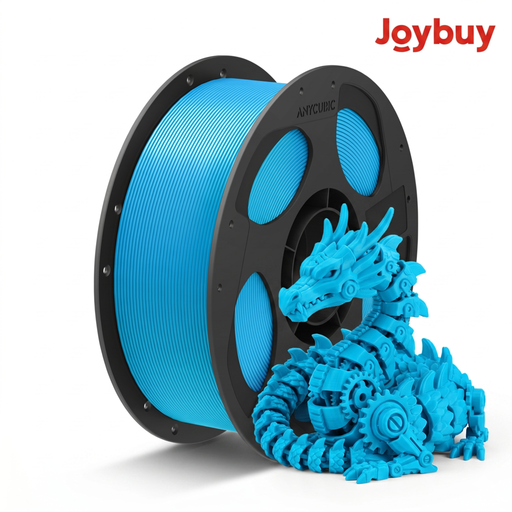
Why this fits the profile: The combination of 1 kg, PLA and a 1.75 mm diameter is straightforward for anyone who regularly prints models and wants to keep material costs under control.
The product specification states the nominal diameter and a tolerance of ±0.02 mm. Before buying, do check that your printer supports 1.75 mm.
PLA material, 1 kg per spool, 1.75 mm diameter and a choice of several colours.
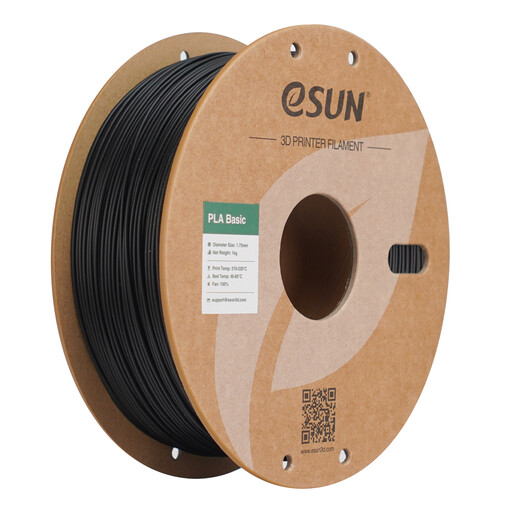
Why this fits the profile: This black PLA spool is aimed at users who want a neat basic colour and support for fast print profiles.
According to eSUN's product information, ePLA-Basic is designed for fast FDM printers. The stated speed is a product specification, not a guarantee for every printer.
1.75 mm, 1 kg, black PLA and, according to eSUN, suitable for high flows on certain printers.
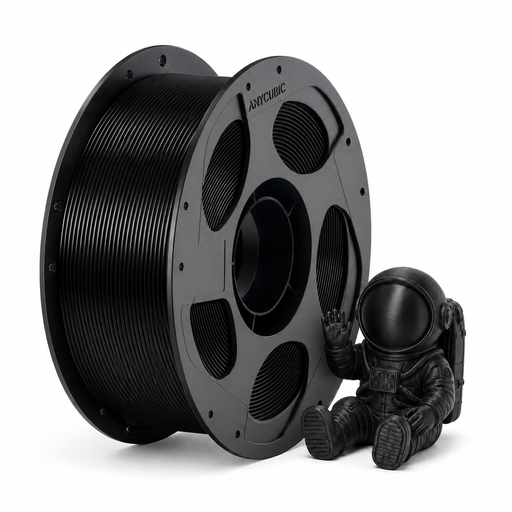
Why this fits the profile: PETG is a logical category to consider for functional prototypes, parts and prints where PLA does not offer the desired material properties.
The product description mentions PETG, 1 kg and black colour. This makes the material clearer to distinguish from PLA; just make sure to adjust your print settings for PETG.
PETG material, 1 kg per spool, black colour and vacuum packaging with desiccant according to the product description.
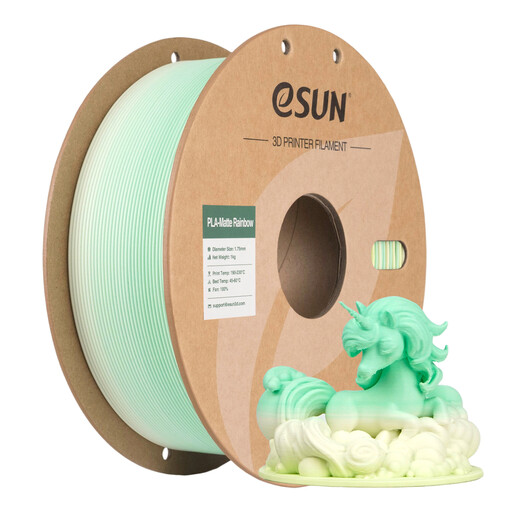
Why this fits the profile: The matte rainbow colour is suitable for decorative models, props and creative projects where appearance plays an important role.
The product name clearly states the matte finish, colour gradient, diameter and weight. This means you know in advance that the spool is mainly aimed at visual projects.
PLA, 1.75 mm, 1 kg and a matte rainbow finish with yellow, white and aqua.
When using a new spool, print a small test object. Check the following:
For filament for Bambu Lab, filament for Creality or other fast machines, suitable slicer profiles are useful, but always check the manufacturer's recommended temperatures. A printer profile is no substitute for a test print.
Store PLA and PETG in a dry place and seal the packaging after use. You might note on the spool when you opened it. That way, if problems arise, you can more quickly determine whether moisture is a factor.
We have compiled a full, up-to-date list of products that fully meet these strict selection criteria and current European safety regulations.
No. First check the specifications of your printer and extruder. Many modern FDM printers use 1.75 mm, but some models are designed for 2.85 mm. The filament diameter must match your printer's feed system.
That depends on the weight of your models, supports, infill and any failed prints. Your slicer will usually show you how many grams of filament are needed before you print. A 1 kg spool can therefore produce several small models, but far fewer large functional parts.
The spool price varies by brand and variant. PLA can be cost-effective for general models and is often easy to set up. PETG may be more suitable when a part needs specific properties. So compare the price per kilogram and the suitability for your application, not just the price on the product page.
