
Vandaag of morgen in huis

Kwaliteit gegarandeerd

Welkomstaanbiedingen ontgrendelen: GRATIS bezorging | Tot 80% korting | Gratis 30 dagen JoyPlus-proefperiode
Download de app
A compact 1:24 4WD RC drift car may seem straightforward at first: charge the battery, pair the controller and off you go. In practice, models can vary considerably in their drive systems, tyres, steering and spare parts. With a cheap remote-controlled drift car in particular, missing accessories or limited adjustment options can lead to extra costs later on.
Look out for these three common pitfalls:
“Drift” without suitable tyres
Some RC cars come only with hard plastic or standard rubber tyres. You can still slide them, but it’s not easy to switch between controlled drifting and grip-focused racing.
A gyro you can’t adjust
An RC car with a gyro can help correct the rear end during a drift. But if the stabilisation has only one fixed setting, the car may feel too twitchy for beginners or not free enough for more experienced drivers.
A set that isn’t really complete
Check whether the battery, charging cable, controller and any spare or racing tyres are included. A low purchase price may seem less appealing if you have to buy these items separately.
A 4WD radio-controlled car is powered by all four wheels. This can provide more even power distribution when accelerating and coming out of a corner. Proportional control is also useful for drift practice: the car responds not just to full throttle or full braking, but also to small movements of the trigger and steering wheel.
Consider the surface you’ll be using it on, too. A small 1:24 car is best suited to flat floors, smooth concrete or a clean surface. Deep-pile carpet, gravel and wet surfaces can put extra strain on the steering and drive system.
An built-in gyro measures the car’s movement and, according to the product description, makes corrections when the rear end slides out. The gyro on the selected model is adjustable, so you can tailor the correction to your driving experience. This makes an RC car with a gyro a good option if you want to start with gentle practice and work up to longer drifts.
The product description also lists two speed modes. A lower setting can be handy for beginners aged around eight and up, while the higher setting offers more of a challenge for teenagers and adults. For children, always take the age recommendation, local rules on use and adult supervision into account.
An RC car with interchangeable tyres offers more options than a model with just one set. Drift tyres are designed to make sliding easier, while racing tyres are made for more grip. According to the product description, the 1:24 models come with two types of tyres. Always check the current package contents before buying.
An RC car with a rechargeable battery means you won’t need to keep buying disposable batteries for the car. The models mentioned use a 7,4V lithium battery. Also check the charging method, charging time, availability of spare batteries and safe storage. Never leave a lithium battery charging unattended, and only use the supplied or recommended charging accessories.
LED lights are mainly a visual bonus. An RC drift car with LED lights is easier to see in low light, but lights are no substitute for a safe, clear driving area. Indoors, keep away from stairs, breakable items and pets.
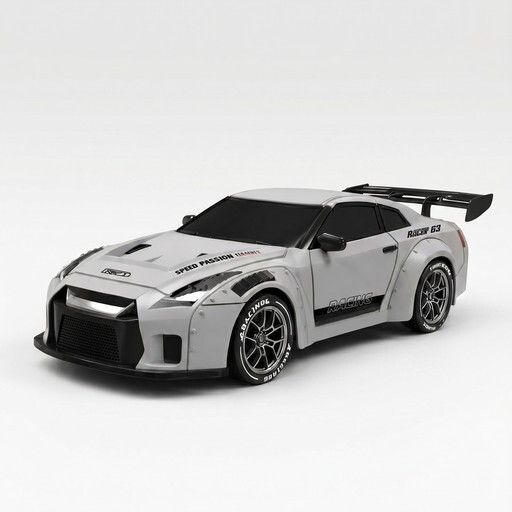
Why it suits this profile: This compact radio-controlled model car combines two speed modes with an adjustable gyro. You can start at a lower speed and move on to a sportier driving style when you’re ready.
According to the product description, a 7,4V battery, two types of tyres, LED lights and a gyro are included. Check the current package contents before ordering.
4WD drive, adjustable gyro stabilisation, interchangeable tyres and an ABS body, according to the product information.
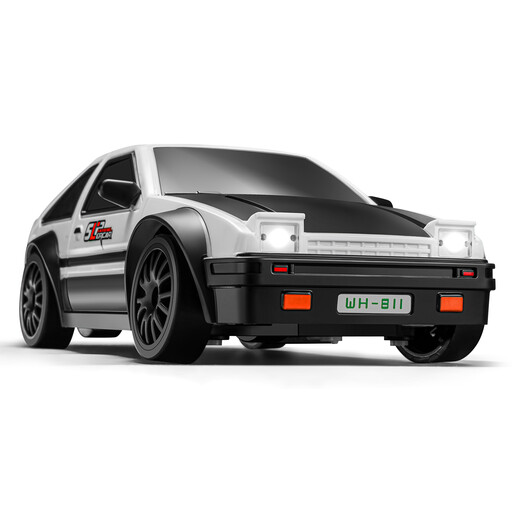
Why it suits this profile: A good choice if you’re looking for a well-equipped 1:24 set, with attention to adjustability, appearance and the option to switch between drifting and racing.
The product description specifically lists a gyro, two types of tyres, independent suspension, LED lights and a rechargeable 7,4V battery.
A choice of drift or racing tyres, proportional steering and an ABS plastic body, according to the product details.
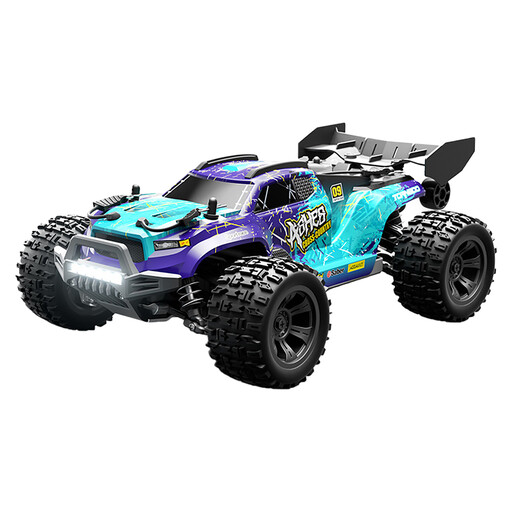
Why it suits this profile: This model is for anyone who wants to drive outdoors on grass, sand or uneven ground as well as drift. It isn’t a 1:24 drift model, but it’s an alternative for more demanding outdoor use.
The product information lists a 7,4V 1500mAh battery, four-wheel drive, off-road tyres and a reinforced chassis. Check the instructions before driving through water or mud.
A more powerful drive system designed for outdoor use, large non-slip tyres, LED headlights and an adjustable 2.4GHz transmitter, according to the product description.
We’ve put together a complete, up-to-date list of products that meet these strict selection criteria and the applicable European safety regulations.
Yes, a small model can be easier for beginners to manage, especially if it has a low-speed mode and an adjustable gyro. Start on a smooth, open floor and practise accelerating, braking and taking short corners. Don’t set the gyro to its strongest correction straight away; first learn how the car responds.
Run time depends on battery capacity, speed, surface and driving style. Frequent acceleration and driving at high speed use more power. So look beyond the voltage, such as 7,4V, and check the capacity, charging time and availability of a spare battery. Store a lithium battery according to the manufacturer’s instructions.
You can on a flat, clean surface, such as dry concrete or a smooth patio. Grass, sand, damp conditions and small stones can cause problems more quickly for a compact car. If you plan to drive off-road regularly, a larger off-road model with all-terrain tyres is a better choice than a lightweight drift car.
