
Vandaag of morgen in huis

Kwaliteit gegarandeerd

Welkomstaanbiedingen ontgrendelen: GRATIS bezorging | Tot 80% korting | Gratis 30 dagen JoyPlus-proefperiode
Download de app
Changing a wheel seems simple until a socket slips, the wrong size damages the nut or an impact wrench deforms the socket under heavy load. Anyone searching for a 1/2 inch impact socket set for wheel nuts will often see many similar offers. However, the sets can differ in important ways.
Pay particular attention to these three common pitfalls:
The designation 1/2 inch drive refers to the square drive connection on the impact wrench or ratchet. The socket itself may be 17 mm, 19 mm or 21 mm, for example. So check both components:
An impact socket set with a 1/2 inch connection is intended for jobs where high torque changes may occur. For finally tightening wheel nuts, it is best to use a torque wrench in accordance with the vehicle manufacturer's instructions. An impact wrench is particularly useful for loosening and for initially tightening the nuts.
You will often see Cr-Mo steel used for impact sockets, also known as chrome molybdenum. Product descriptions generally associate this material with greater durability under impact use. That does not mean every Cr-Mo socket will remain undamaged in all conditions. Overloading, using the wrong size or using a worn socket still carries risks.
Cr-V steel, or chrome vanadium, is commonly used in standard hand tools. A Cr-V set may be suitable for ratchets and manual use, but when using it with an impact wrench, check that the manufacturer expressly permits this. Also look at the finish: impact sockets are often black and have relatively thick walls.
A practical wheel nut socket set should contain at least the sizes you need for your car. Common metric sizes include:
For older vehicles, imported cars or certain machines, SAE impact sockets may be useful. Common inch sizes include 3/4 inch, 13/16 inch, 7/8 inch and 15/16 inch. A combined set with metric and SAE impact sockets can save space and reduce purchase costs, but check that the markings are clearly distinguishable.
Do you have alloy wheels or very little space around the wheel nut? If so, consider thin-wall protective wheel nut sockets. Bear in mind that “thin-wall” does not automatically mean that the socket is suitable for every impact wrench. Check the product description, the exact sizes and how the socket is intended to be used.
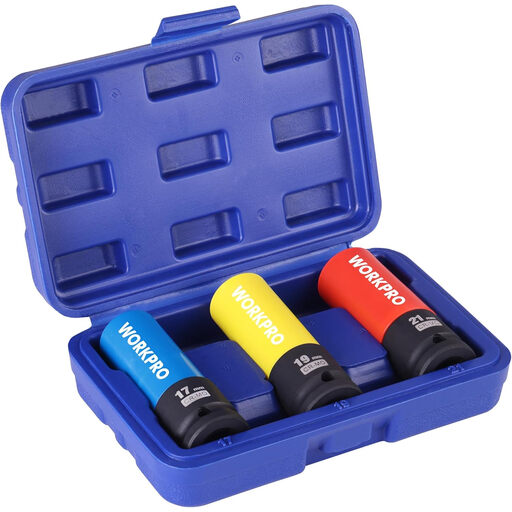
Why it suits this profile: This compact set focuses on three commonly used metric wheel nut sizes. It is practical if you mainly change tyres on one car and do not need an extensive range of sizes.
The product description specifies a thin-wall design, Cr-Mo steel and protective use around wheel nuts. Before buying, however, check that the wall thickness is suitable for your wheels.
17, 19 and 21 mm; 1/2 inch connection; Cr-Mo steel; supplied with a storage case.
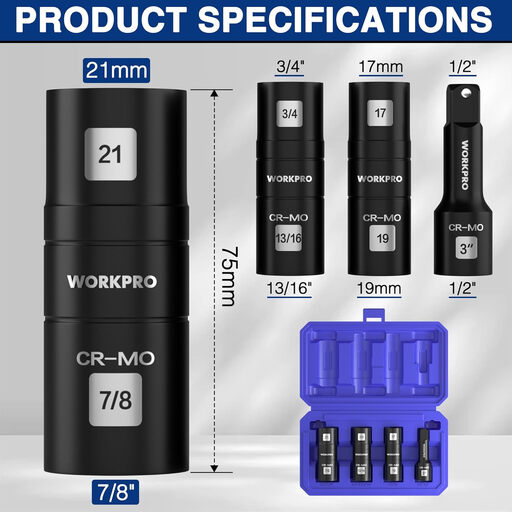
Why it suits this profile: This flip-style set combines metric and SAE sizes. It is ideal for motorists or DIY mechanics who work on several vehicles, imported cars or machines.
The sockets have laser-etched size markings, making metric and SAE sizes quicker to tell apart. According to the product description, the Cr-Mo material is designed for high torque changes.
17, 19 and 21 mm plus 3/4, 13/16 and 7/8 inch; 3-inch extension bar; storage case; reversible sockets.
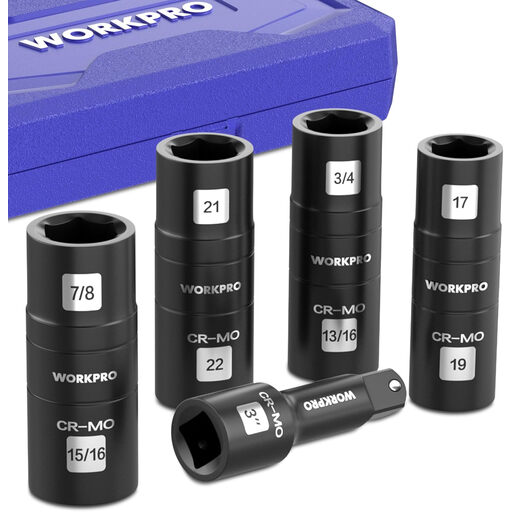
Why it suits this profile: The combination of eight sizes and an extension bar makes this set suitable for garages, keen DIY enthusiasts and users who maintain several cars.
The sizes are laser-etched onto the sockets, and the set is supplied in a blue plastic case. This keeps the sockets organised and reduces the chance of selecting the wrong size.
17, 19, 21 and 22 mm plus four SAE sizes; Cr-Mo steel; 3-inch extension bar; storage case.
We have compiled a complete, up-to-date list of products that fully meet these strict selection criteria and the applicable European safety regulations.
Before use, check that the socket fits fully over the wheel nut. A socket that only engages partially can damage the corners of the nut. Do not use a socket with visible cracks, significant wear or a deformed drive connection.
Also bear the following in mind:
This varies by make, model and year. 17 mm, 19 mm and 21 mm are common, but check the size on the car, in the handbook or with a reliable parts supplier. A set with SAE sizes is particularly useful if you also maintain vehicles or machines with inch-sized fasteners.
In most cases, a 1/2 inch socket will fit a ratchet with the same square drive connection. However, check that the socket is approved for manual use. When fitting with a ratchet or torque wrench, it is important that the socket fits securely and is not damaged. Only use the impact function with sockets designed for it.
Its service life depends on the load, storage, fit and maintenance. A Cr-Mo impact socket may be suitable for high torque changes, but using the wrong sizes, rust, dropping the sockets and prolonged overloading will shorten their lifespan. Inspect the sockets regularly and replace any with cracks, rounded edges or a damaged drive connection.
